4-1-3-2 Formation
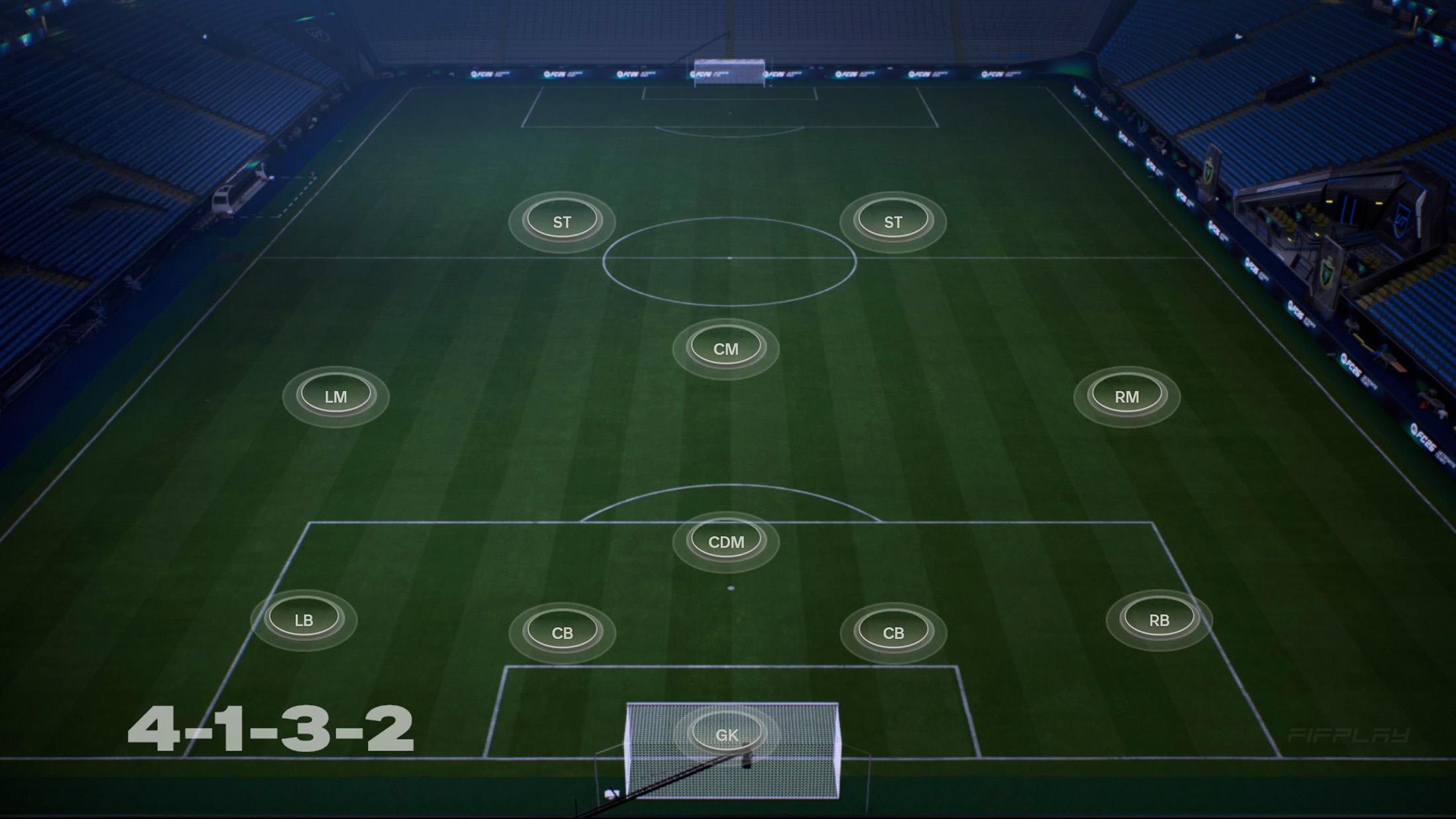
The 4-1-3-2 is a balanced attacking formation built around strong central control while still maintaining solid defensive structure. It uses a back four, a holding defensive midfielder, three central midfielders positioned ahead of them, and a two-striker partnership leading the attack. The compact midfield setup allows teams to remain organized defensively while creating multiple attacking options through the center of the pitch.
The CDM operates in a deeper role, protecting the backline and helping circulate possession during buildup play. Ahead of the holding midfielder, the three central midfielders provide energy, creativity, and balance across both defensive and attacking phases. The central player often acts as the main link between midfield and attack, while the wider midfielders contribute through pressing, ball progression, and supporting the flanks when needed. Up front, the two strikers work together to stretch defenses and combine with midfield runners to create regular scoring opportunities.
In FC 27 gameplay, the 4-1-3-2 is highly effective for players looking for a combination of defensive security and attacking presence. The two-striker setup applies constant pressure on opposing defenders, while the compact midfield shape helps control central areas of the pitch. Quick transitions through midfield can overwhelm opponents, and having two forwards in advanced positions makes attacking moves more direct and dangerous.
Key Roles in the 4-1-3-2
The CDM plays a crucial role in shielding the defense, breaking up attacks, and distributing possession from deep areas. The three central midfielders must provide high work rate, intelligent movement, and reliable support in both attacking and defensive situations. The strike partnership should feature complementary qualities, with one forward capable of holding up the ball and the other focusing on runs behind the defensive line. Full-backs are also important, as they provide width whenever the midfield remains narrow and compact.
Preferred Team Play Styles
This formation performs best with balanced or fast buildup styles that focus on quick passing combinations through central areas. It is also highly effective on counter-attacks, where the midfielders and strikers can transition forward together and create overloads in dangerous positions.
Advantages and Disadvantages
One of the biggest strengths of the 4-1-3-2 is its strong central presence, supported by a dangerous two-striker partnership and a compact midfield structure. The close positioning between players encourages quick passing and coordinated movement in attack. However, the formation lacks natural width and places a significant workload on the full-backs to support wide areas. It can also struggle against formations that stretch the pitch effectively through wingers and overlapping runs.
Key Attributes for Success
The CDM should possess strong tackling, stamina, positioning, and composure under pressure. Central midfielders benefit from vision, passing quality, technical ability, and high work rate across the pitch. Strikers should combine finishing, pace, movement, and complementary attacking styles. Full-backs require stamina, crossing ability, pace, and defensive awareness to manage wide spaces effectively throughout the match.
How to Counter the 4-1-3-2
The most effective way to counter the 4-1-3-2 is by targeting the wide areas with fast wingers and overlapping full-backs. Formations such as the 4-3-3 or 3-4-3 can stretch the compact midfield shape, isolate defenders, and create dangerous opportunities down the flanks.
Comments
No comments yet. Be the first to share your thoughts!