4-4-2 Formation
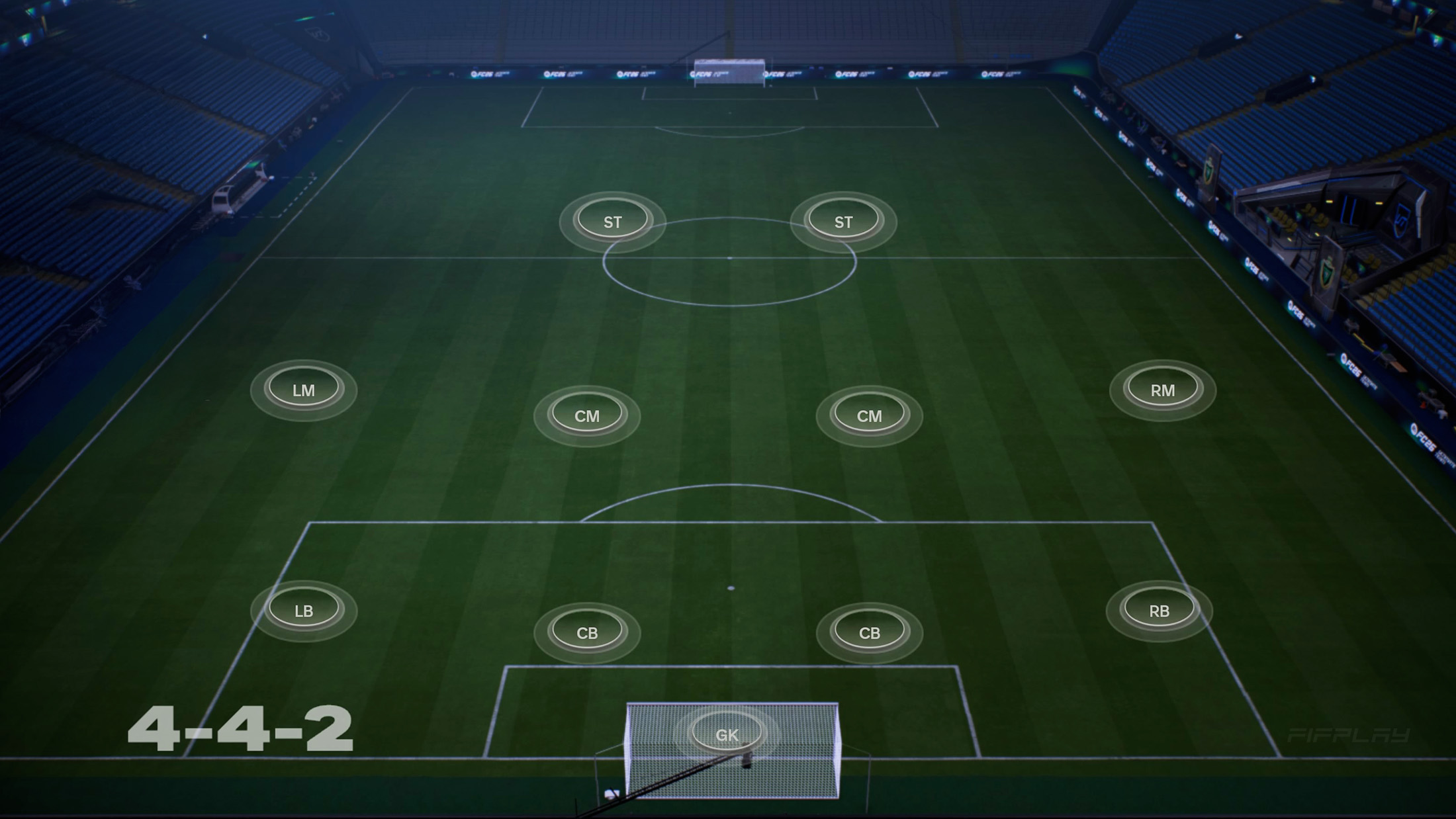
The 4-4-2 is one of the most classic and well-balanced formations in football and FC gameplay. It consists of four defenders, four midfielders, and two strikers, creating a simple but highly effective structure that balances defensive organization with attacking threat. The flat midfield line keeps the team compact while still providing natural width through the wide midfielders.
In attack, the two strikers work together to create constant pressure on the opposition defense. Typically, one forward drops deeper to link play and create space, while the other focuses on runs behind the backline and finishing chances. The midfield four provides stability across the pitch, with the central midfielders responsible for defensive coverage and ball distribution, while the wide midfielders stretch play, deliver crosses, and support attacking transitions. Defensively, the back four remains compact and disciplined, making it difficult for opponents to exploit central gaps.
In FC gameplay, the 4-4-2 is ideal for players who prefer a structured and disciplined tactical setup. The formation is especially effective for counter-attacking football and controlling wide areas, while still allowing flexibility to either press aggressively or defend deeper when needed. However, it can struggle against systems that overload midfield with extra central players, meaning the midfield line must remain organized and work hard defensively throughout the match.
Key Roles in the 4-4-2
The two strikers should complement each other effectively, with one capable of hold-up play and link-up combinations while the other uses pace and movement to attack space behind defenders. Wide midfielders must combine pace, stamina, crossing ability, and defensive work rate to contribute on both sides of the ball. Central midfielders require tackling ability, composure, passing range, and positional awareness to maintain balance in midfield. The back four must stay organized, disciplined, and communicate well to preserve the defensive shape.
Preferred Team Play Styles
The 4-4-2 performs best with direct and counter-attacking football, where quick transitions allow the strike partnership to exploit defensive spaces. It can also adapt well to balanced possession-based systems, provided the midfield remains compact and disciplined when out of possession.
Advantages and Disadvantages
One of the main strengths of the 4-4-2 is its balanced structure, offering natural width, defensive stability, and an effective strike partnership up front. The formation is straightforward to organize and provides clear responsibilities for every position. However, central midfield can become overloaded against formations using three or more midfielders, and the system demands high work rate from the midfield line to remain competitive defensively. Against technically strong opponents, the shape can also become predictable if movement and pressing are not coordinated properly.
Key Attributes for Success
Strikers should possess finishing ability, positioning, pace, strength, and intelligent movement. Wide midfielders benefit from stamina, dribbling, crossing quality, and defensive contribution. Central midfielders require tackling, vision, composure, and passing ability under pressure. Defenders should combine awareness, marking, positioning, discipline, and aerial strength to maintain a reliable defensive structure.
How to Counter the 4-4-2
Formations such as the 4-2-3-1 or 4-3-3 can dominate possession and create numerical superiority in midfield, making it difficult for the 4-4-2 to control central areas. Overloading the middle of the pitch with an extra midfielder often forces the shape to become stretched, isolating the strikers and disrupting the balance between defense and attack.
Comments
No comments yet. Be the first to share your thoughts!