4-3-3 Formation
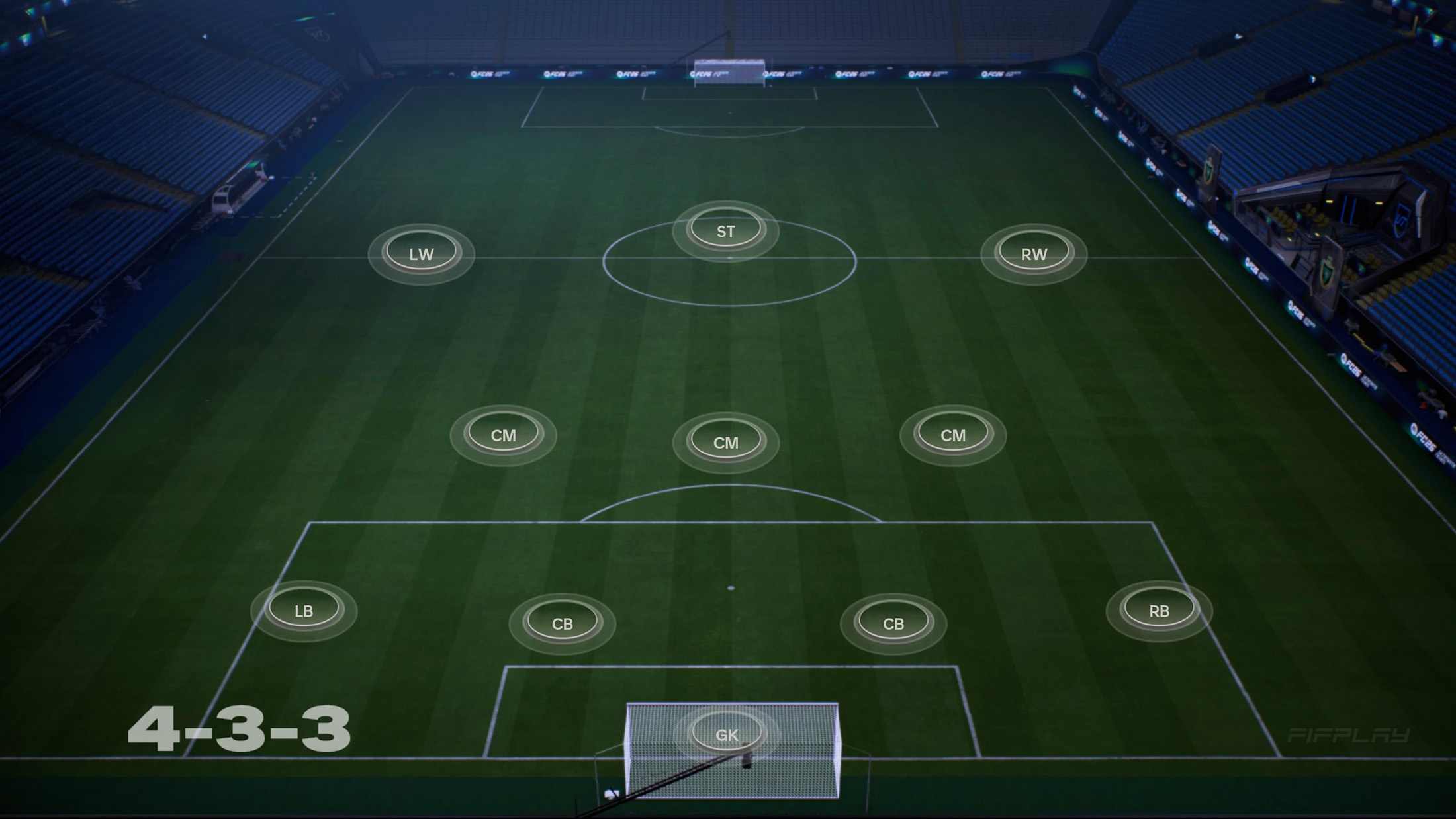
The 4-3-3 is one of the most recognizable and versatile formations in FC, built around width, attacking movement, and balanced midfield control. It features a back four, a three-man midfield, two wingers, and a lone striker leading the attack. By spreading players across the pitch, the formation creates natural width and opens spaces that can be difficult for compact defensive systems to contain.
The midfield trio provides structure and balance, with one midfielder often sitting deeper to protect the defense while the others support attacking phases and transitions. The wingers are central to the system, using pace, dribbling, and intelligent movement to stretch defenses, deliver crosses, or cut inside to create scoring opportunities. The striker acts as the focal point in attack, benefiting from service provided by the wide players and midfield runners. Full-backs frequently overlap to reinforce attacking width and create additional passing options on the flanks.
In FC 27 gameplay, the 4-3-3 is highly effective for players who enjoy possession-based football combined with fast attacks down the wings. The formation adapts well to both controlled buildup and quick counter-attacking styles, as the wingers offer immediate outlets while the midfield maintains defensive stability. However, the system can become vulnerable in central midfield areas if players lose positional discipline, especially against narrow formations built around midfield dominance.
Key Roles in the 4-3-3
The wingers are among the most influential players in the system, requiring pace, dribbling ability, creativity, and finishing quality. The striker must excel at positioning, movement, and clinical finishing inside the box. Midfielders need the right balance between defensive awareness, passing range, and attacking support, while full-backs are expected to contribute with overlapping runs and defensive recovery when possession is lost.
Preferred Team Play Styles
The 4-3-3 performs best with attacking football focused on width, quick switches of play, and aggressive movement in wide areas. Crossing opportunities, wing overloads, and fast passing combinations are essential to maximizing the formation’s attacking potential. It also adapts naturally to high-pressing systems, using the front three to apply pressure high up the pitch.
Advantages and Disadvantages
One of the biggest strengths of the 4-3-3 is the attacking variety it provides through natural width, fluid forward movement, and midfield flexibility. The formation supports both possession play and direct attacking football, making it effective in many tactical situations. However, it can leave gaps in central midfield if the midfield trio becomes stretched, and it depends heavily on the wingers to consistently create attacking opportunities. Full-backs must also remain disciplined to avoid exposing the defense during counter-attacks.
Key Attributes for Success
Wingers should possess pace, dribbling, crossing ability, creativity, and finishing quality. The striker benefits from strong movement, positioning, composure, and clinical finishing. Midfielders require stamina, passing ability, vision, and tactical awareness to maintain balance across the pitch. Full-backs need pace, crossing quality, stamina, and defensive reliability, while center-backs should combine strength, composure, and aerial dominance.
How to Counter the 4-3-3
Compact formations such as the 4-2-3-1 Narrow or 4-1-2-1-2 Narrow can frustrate the 4-3-3 by limiting space through central areas and reducing the influence of the midfield. Overloading central midfield can also cut passing lanes toward the wingers, while quick counter-attacks through the middle can exploit the spaces left behind by advanced full-backs.
Comments
No comments yet. Be the first to share your thoughts!