3-4-3 Formation
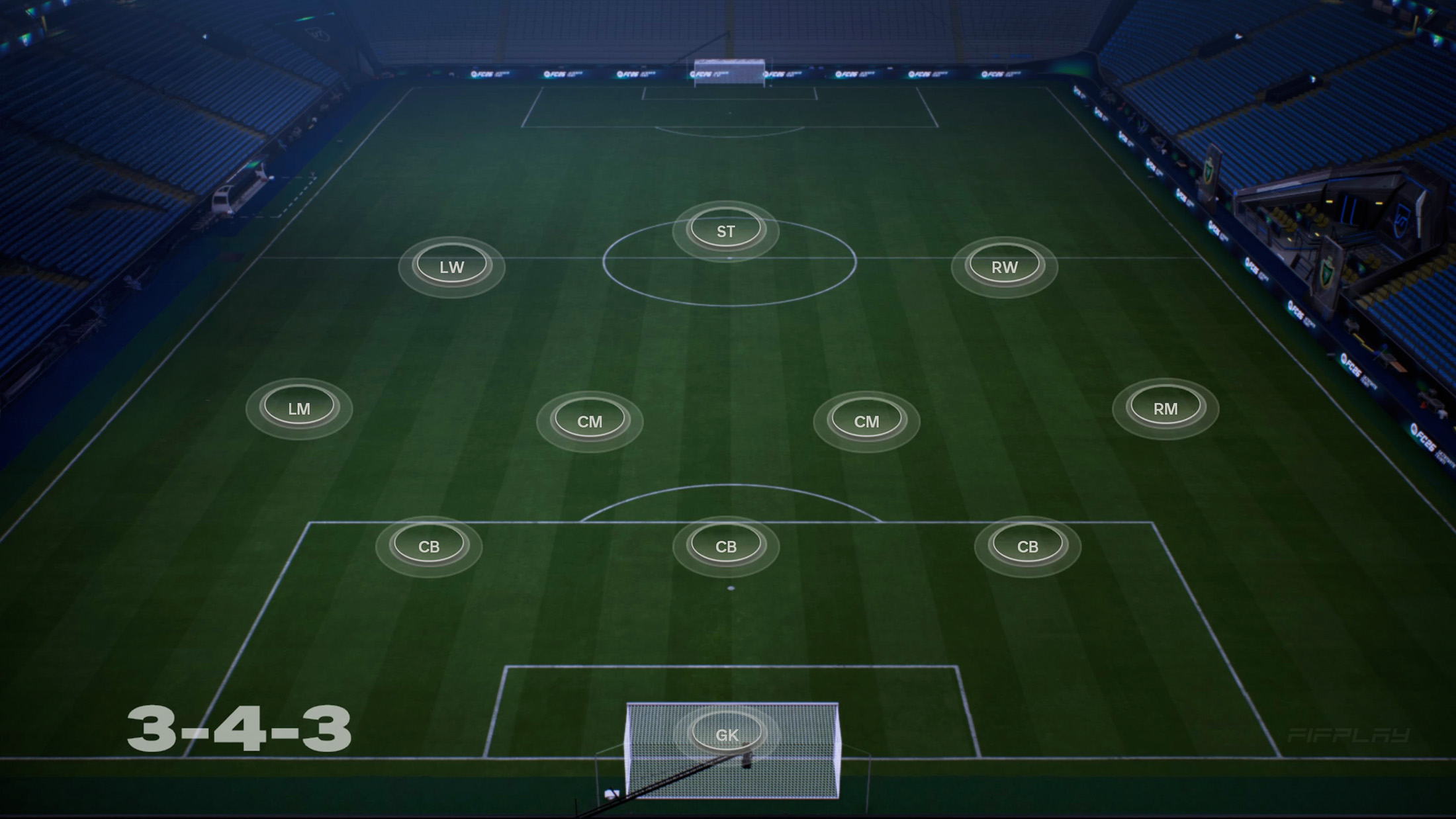
The 3-4-3 formation is one of the most aggressive attacking systems in football, built to maximize width, pressing intensity, and attacking numbers. It uses three center-backs in defense, a midfield four supported by energetic wing-backs, and a front three positioned high up the pitch to constantly threaten the opposition. This setup forces opponents to defend across the full width of the field, often creating spaces in central areas that midfielders and forwards can exploit.
Because of its attacking nature, the 3-4-3 depends heavily on wing-backs to provide width and contribute in both defensive and offensive phases. The central midfield pair must work relentlessly to control possession, protect the defense, and support transitions. Further forward, the front three create continuous attacking pressure through movement, wide runs, overlaps, and direct attacks on goal. While the system can overwhelm opponents with numbers in attack, it also requires strong balance and discipline to avoid being exposed defensively.
In FC 26, the 3-4-3 is ideal for players who enjoy aggressive pressing and high-tempo attacking football. The wide forwards create dangerous counter-attacking opportunities, while the wing-backs can consistently deliver crosses and overload the box. To use the formation effectively, teams need quick defenders capable of covering wide spaces, wing-backs with excellent stamina and recovery speed, and forwards with strong dribbling, movement, and finishing ability.
Key Roles in the 3-4-3
Wing-backs play a crucial role in maintaining width, supporting attacks, and recovering defensively when possession is lost. The midfield duo must remain disciplined, with one player typically sitting deeper while the other pushes forward to support attacks. The front three should complement each other well, with wide forwards cutting inside to create chances and the central striker acting as the main finishing threat and focal point in attack.
Preferred Team Play Styles
The 3-4-3 performs best with high-pressing and possession-oriented styles that emphasize quick passing and aggressive movement. Fast circulation through midfield and overlapping runs from the wing-backs help create dangerous scoring opportunities. The formation is also highly effective in counter-attacking systems, especially when using quick wide forwards to exploit open space behind the defense.
Advantages and Disadvantages
One of the main strengths of the 3-4-3 is its constant attacking pressure, strong width, and multiple goal-scoring options across the front line. The formation allows teams to dominate territory and keep opponents pinned back for long periods. However, it can become vulnerable to quick counter-attacks through central midfield, particularly if the midfield pair is overrun. The system also places significant demands on the wing-backs, and losing possession high up the pitch can leave the defense exposed.
Key Attributes for Success
Wing-backs should possess excellent stamina, pace, crossing ability, and defensive work rate. Wide forwards benefit from dribbling, creativity, acceleration, and clinical finishing. The central striker should excel in positioning, strength, hold-up play, and finishing inside the box. Midfielders need composure, passing range, tackling ability, and positional awareness, while defenders require speed, anticipation, aerial strength, and recovery ability to manage transitions effectively.
How to Counter the 3-4-3
The best way to counter the 3-4-3 is by overloading central midfield and taking advantage of the spaces left behind the wing-backs. Quick switches of play and rapid passing combinations can pull the formation apart and create openings in wide areas. Formations such as the 4-2-3-1 or 4-3-3 are often effective because they can stretch the back three while also limiting the attacking influence of the wide forwards.
Comments
No comments yet. Be the first to share your thoughts!