4-2-3-1 Formation
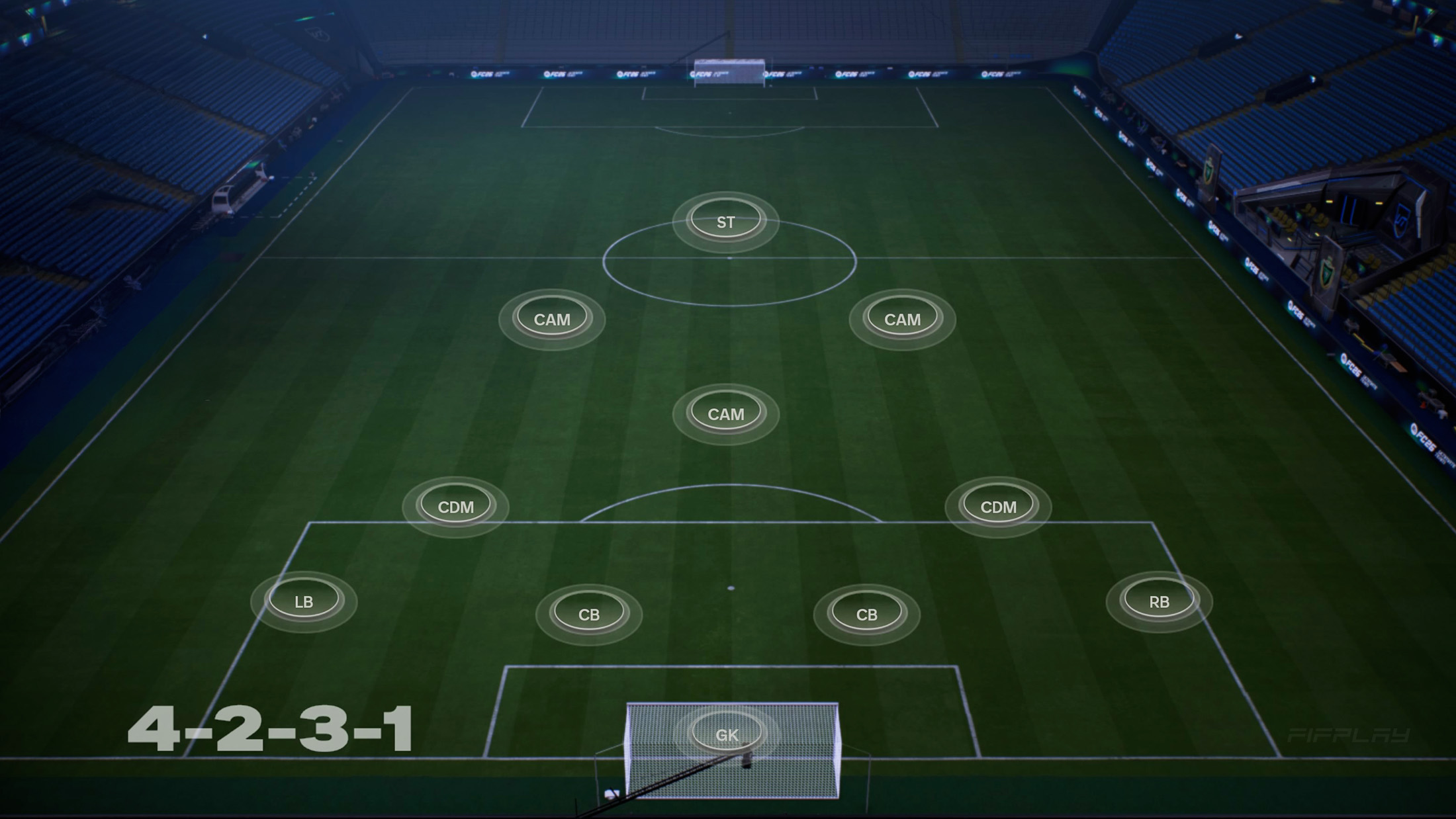
The 4-2-3-1 is one of the most balanced and widely used formations in FC, offering a strong mix of defensive security and attacking flexibility. It features a back four, two holding midfielders, three advanced attacking midfielders, and a lone striker leading the attack. This structure provides stability across the pitch while still allowing teams to create chances through both central and wide areas.
The two CDMs operate as a protective shield in front of the defense, breaking up opposition attacks and helping progress the ball into midfield. Ahead of them, the attacking midfield trio forms the creative core of the system. The wide players stretch the opposition and create space, while the central CAM acts as the primary playmaker, linking midfield with the striker through intelligent movement and passing. The lone forward benefits from the support around them, receiving through balls, crosses, and quick combinations in dangerous areas.
In FC 27 gameplay, the 4-2-3-1 is ideal for players who want to control possession without sacrificing defensive organization. The double pivot in midfield allows the full-backs to push forward with greater freedom, while the attacking midfielders can alternate between central combinations and wide attacks. The formation is also highly effective on counter-attacks, as the midfield line can transition quickly to support the striker in advanced positions.
Key Roles in the 4-2-3-1
The CDMs are responsible for protecting the defense, recovering possession, and initiating buildup play from deeper areas. The central CAM serves as the main creative influence, supplying passes and linking effectively with the striker. Wide midfielders provide pace, width, dribbling ability, and crossing support in attack. The lone striker must combine movement, hold-up play, physical presence, and reliable finishing to lead the line effectively.
Preferred Team Play Styles
The 4-2-3-1 performs best with balanced or possession-based styles focused on controlled buildup and intelligent movement. It also adapts very well to counter-attacking football, allowing teams to attack quickly through the CAM or switch play to the wide midfielders to stretch defenses.
Advantages and Disadvantages
One of the main strengths of the 4-2-3-1 is the defensive protection offered by the double pivot alongside the flexibility created by the attacking midfield trio. The formation supports both patient buildup and quick transitions, making it effective in many tactical situations. However, the system can leave the striker isolated at times if support arrives too slowly, and it may lack the direct width and constant overlapping pressure found in more attack-oriented wide formations.
Key Attributes for Success
The CDMs should possess strong tackling, positioning, stamina, and composure under pressure. The CAM benefits from vision, agility, creativity, and accurate passing in tight spaces. Wide midfielders require pace, dribbling ability, crossing quality, and intelligent movement. The striker should combine finishing, strength, positioning, and movement off the ball. Full-backs need stamina, defensive awareness, and the ability to support attacks with overlapping runs.
How to Counter the 4-2-3-1
Applying high pressure can disrupt buildup play through the CDMs and limit the influence of the CAM. Wide formations such as the 4-3-3 can stretch the defensive structure and force the holding midfielders to cover larger areas of the pitch. Quick transitions and aggressive pressing on the lone striker can also reduce the formation’s attacking effectiveness by isolating the forward from midfield support.
Comments
No comments yet. Be the first to share your thoughts!