4-4-2 Flat Formation
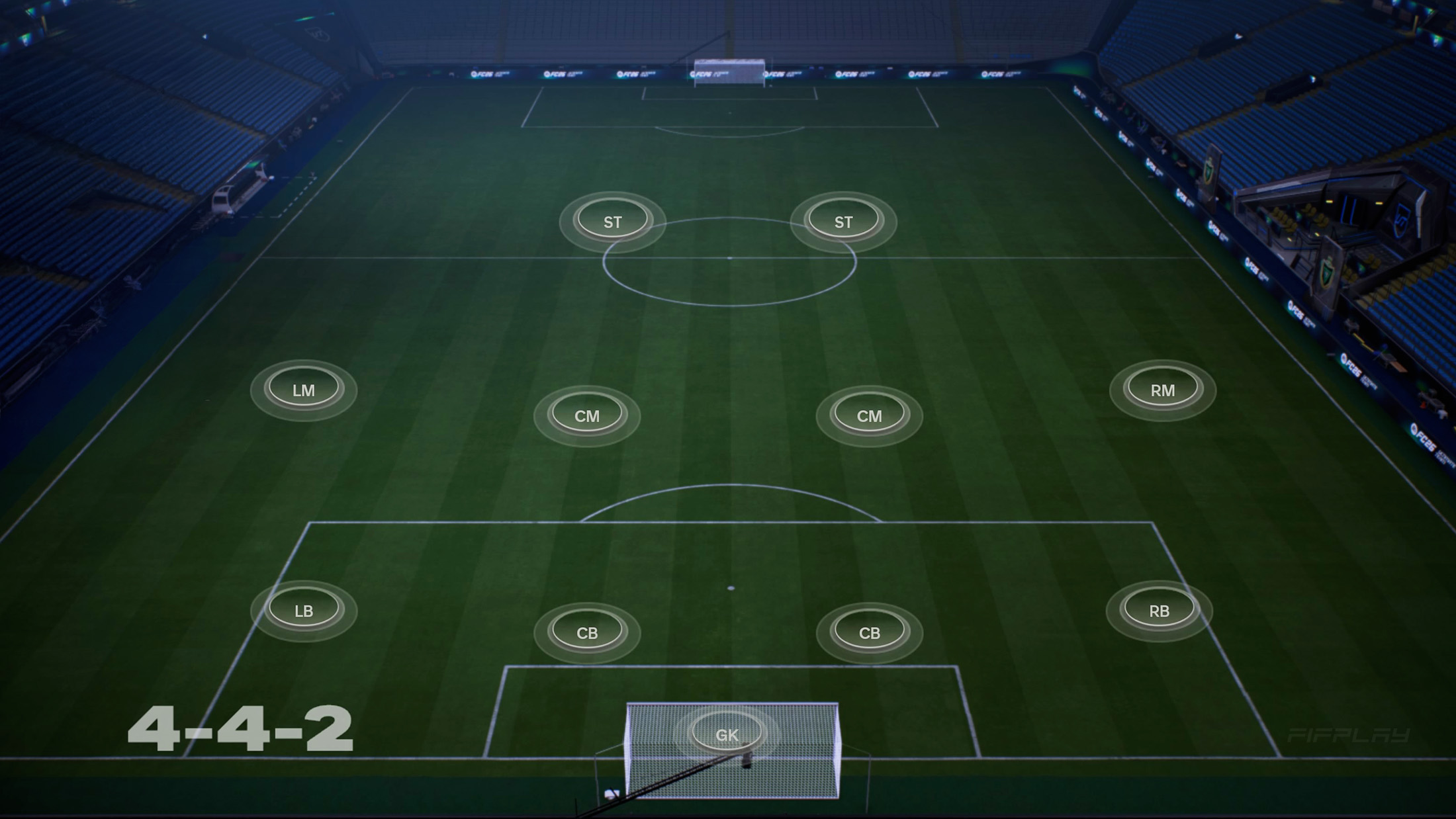
The 4-4-2 Flat remains one of the most dependable and recognizable systems in football, valued in FC gameplay for its structure, balance, and tactical simplicity. Built with a flat midfield four, the formation offers defensive organization, natural width, and support across every area of the pitch. With two forwards leading the attack, it creates a consistent threat up front while maintaining a disciplined shape behind the ball.
The midfield line stays evenly positioned across the pitch, allowing the central midfielders to focus on defensive coverage, ball circulation, and controlling transitions. Out wide, the midfielders stretch the play by supporting attacks, delivering crosses, and helping full-backs in defensive situations. The two strikers operate as a partnership, with one often dropping slightly deeper to connect play while the other attacks space behind the defense. Without possession, the midfield and defensive lines stay compact, making central areas difficult for opponents to exploit.
In FC 27 gameplay, the 4-4-2 Flat is an excellent option for players who prefer a balanced and organized tactical approach. The system performs particularly well in counter-attacking situations and naturally creates width against narrow formations. Its clear structure also makes it easier to maintain defensive discipline throughout the match. However, the flat midfield can struggle against systems that use an attacking midfielder or additional central players, which may create numerical advantages through the middle.
Key Roles in the 4-4-2 Flat
The strike partnership is central to the formation’s success, requiring a combination of movement, hold-up play, pace, and finishing ability. Wide midfielders play a major role in maintaining width, supporting defensive transitions, and creating chances from wide positions. Central midfielders need stamina, tackling ability, composure, and passing quality to keep the team balanced. Defenders must remain organized, disciplined, and positionally aware to preserve the compact defensive shape.
Preferred Team Play Styles
The 4-4-2 Flat performs best with direct or counter-attacking football, using quick transitions and forward passing to take advantage of the two-striker setup. It can also work effectively in possession-based systems as long as the midfield maintains compact spacing and disciplined movement.
Advantages and Disadvantages
One of the main strengths of the 4-4-2 Flat is its balanced structure, combining defensive stability, natural width, and a reliable attacking partnership. The formation is easy to organize and provides clear positional responsibilities throughout the team. However, central midfield can become overloaded against systems using three or more midfielders, and the absence of a dedicated attacking midfielder may reduce creativity through central areas. The system also demands high work rate and stamina from the midfield line to remain effective over the course of a match.
Key Attributes for Success
Strikers should possess strong positioning, finishing ability, pace, and intelligent movement in attacking areas. Wide midfielders benefit from stamina, dribbling, crossing quality, and defensive contribution. Central midfielders require tackling ability, vision, composure, and passing range under pressure. Defenders should combine strength, marking, positioning, discipline, and aerial ability to maintain defensive solidity.
How to Counter the 4-4-2 Flat
Formations such as the 4-2-3-1 or 4-3-3 can create numerical superiority in midfield and separate the strikers from the rest of the team. Quick passing combinations and technically strong midfield play are also effective at pulling the compact shape apart and exposing spaces between the midfield and defensive lines.
Comments
No comments yet. Be the first to share your thoughts!