3-4-2-1 Formation
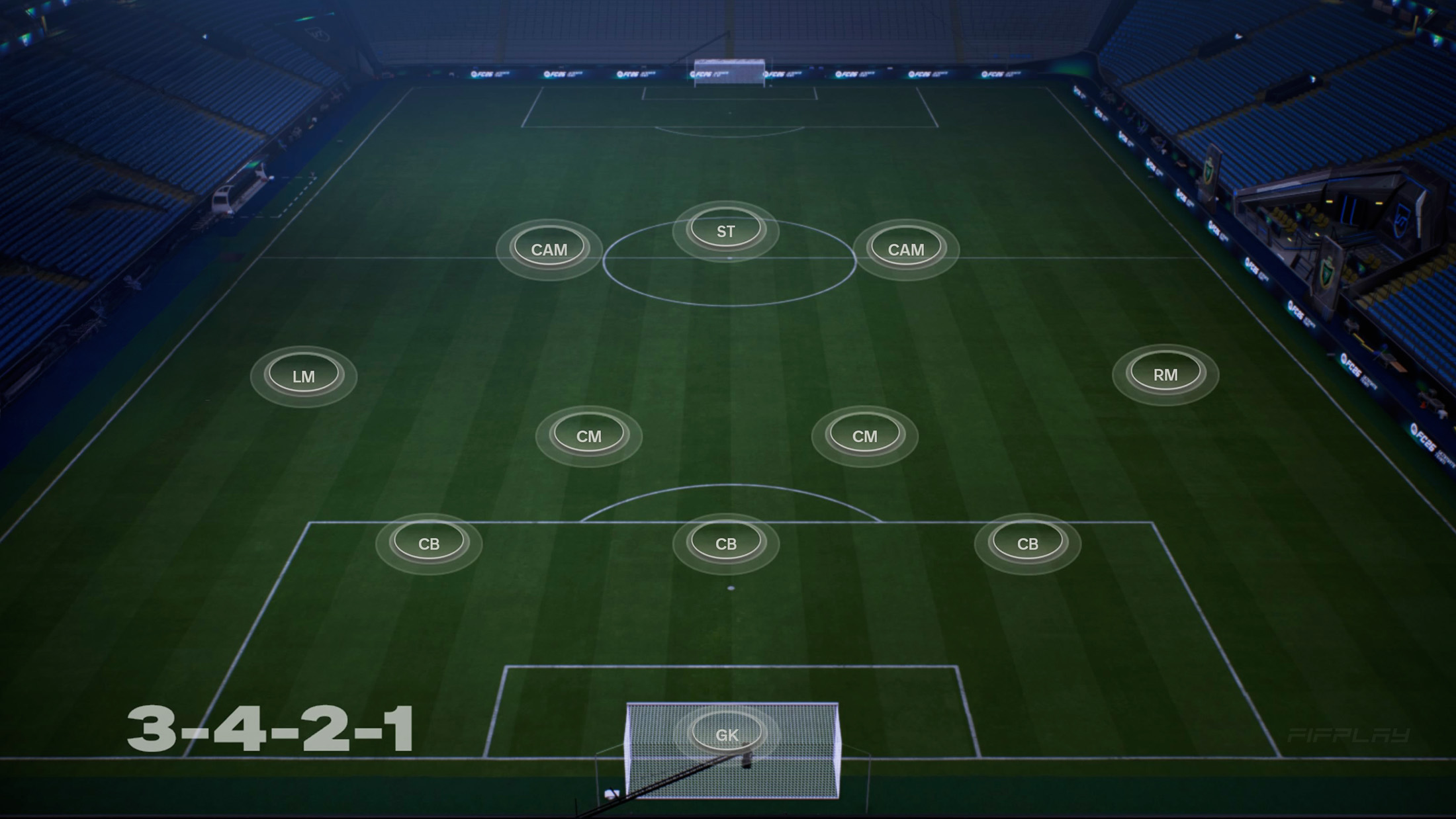
The 3-4-2-1 is an aggressive variation within the back-three systems, built to combine defensive structure with fluid attacking movement. Three center-backs form the defensive foundation, while the midfield four includes two wing-backs who provide width and energy across the flanks. In central midfield, two players manage possession, dictate tempo, and offer protection during transitions. Further forward, two inside forwards operate in the spaces between midfield and defense, supporting the lone striker and creating dangerous overloads in central attacking areas.
This formation is particularly effective at forcing opponents into narrow defensive shapes while stretching the pitch through wing-back movement. Passing lanes frequently open for the inside forwards, who can combine quickly with the striker through one-touch passing, diagonal runs, and movement around the box. Defensively, the wing-backs recover into deeper positions to create a compact back five, helping protect the penalty area and guide opposing attacks toward the wings.
In FC games, the 3-4-2-1 is best suited for players who enjoy quick passing combinations and direct vertical attacks through central areas. Well-timed overlaps from the wing-backs can create constant pressure, especially when paired with smart player instructions that allow one central midfielder to hold position while the other supports attacks. The formation works best with a striker capable of holding up the ball and finishing chances consistently, alongside inside forwards who offer agility, dribbling quality, creativity, and goal threat from different angles.
Key Roles in the 3-4-2-1
The three center-backs provide defensive security and help progress the ball from deep areas. Wing-backs are responsible for maintaining width, supporting attacks, and delivering crosses into the box. One central midfielder typically operates in a deeper holding role, while the other links play between defense and attack. The inside forwards act as creators and additional scoring threats, supporting the striker through movement and combination play. The lone striker must be able to finish chances while also linking effectively with teammates around them.
Preferred Team Play Styles
The 3-4-2-1 performs best with possession-focused football built around quick vertical passing and fluid movement in central areas. Wing-backs help create overloads out wide, while the inside forwards combine in the half-spaces to break defensive lines. High pressing can also be highly effective, particularly when forcing opponents toward the touchline.
Advantages and Disadvantages
One of the biggest strengths of the 3-4-2-1 is its ability to maintain attacking pressure through multiple creative outlets while still remaining compact defensively. The inside forwards and striker create several attacking combinations, making it difficult for defenders to track movement consistently. However, the system can become vulnerable in the spaces left behind the wing-backs, especially against teams that switch play quickly. Defensive discipline from the inside forwards is also important, as failing to track back can expose the midfield and wide areas.
Key Attributes for Success
Wing-backs should possess strong pace, stamina, crossing ability, and work rate to handle both attacking and defensive responsibilities. Inside forwards benefit from agility, dribbling, ball control, creativity, and accurate finishing. The striker should combine strength, positioning, link-up play, and clinical finishing. Central midfielders need vision, passing range, tackling, and positional awareness, while center-backs require anticipation, recovery speed, physicality, and aerial dominance.
How to Counter the 3-4-2-1
The most effective way to counter the 3-4-2-1 is by targeting the wide spaces behind the wing-backs and forcing the back three into uncomfortable defensive situations. Quick switches of play can stretch the formation and create gaps across the pitch. Applying close pressure to the inside forwards can also reduce their influence between the lines. Formations such as the 4-2-3-1 or 4-3-3 are often effective because they naturally create width and isolate the three-man defense.
Comments
No comments yet. Be the first to share your thoughts!