3-1-4-2 Formation
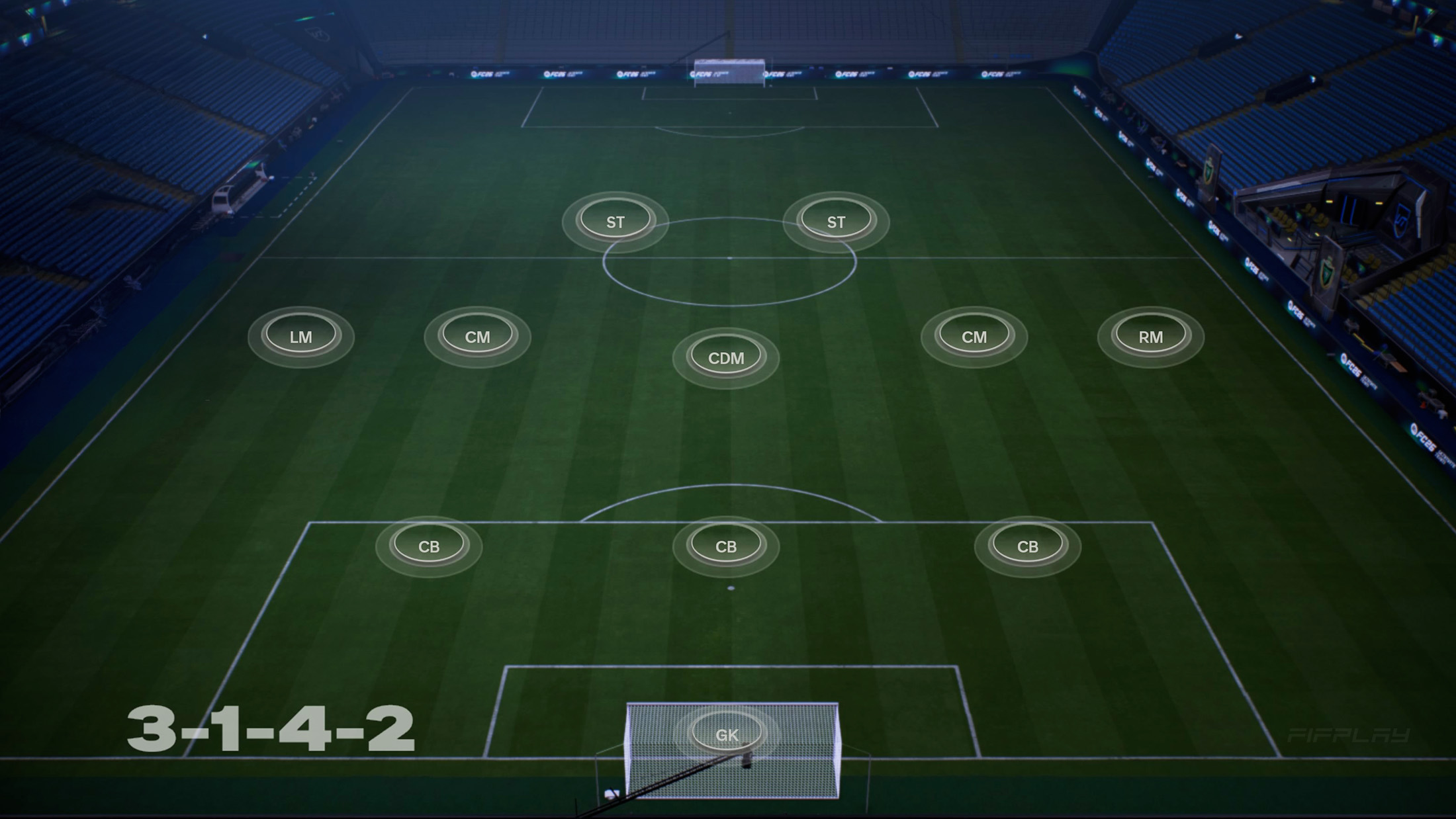
The 3-1-4-2 is a tactical variation of the 3-5-2 formation where one defender, usually a sweeper, steps forward to support both defensive and attacking phases. Much like the traditional 3-5-2, this setup depends heavily on wing-backs to provide width across the pitch. The wide players tend to operate deeper, while one central midfielder advances further forward to take on the creative playmaker role.
The 3-1-4-2 formation builds on the strengths of the 3-5-2 by adding extra defensive balance and greater attacking fluidity. It uses three center-backs at the rear, with one often acting as a sweeper capable of moving into midfield when required. Positioned ahead of the defense is a holding midfielder whose job is to protect the backline, break up attacks, and maintain possession circulation. The midfield unit offers a balanced structure, with central midfielders controlling the rhythm of play, wing-backs stretching the field, and an advanced midfielder connecting the midfield with the forwards. Up front, two strikers work together to pressure defenders, create movement, and generate scoring opportunities.
In FC 26, this formation is highly effective because it combines defensive stability with attacking versatility. The holding midfielder acts as the central anchor, while the wing-backs create width and prevent the attack from becoming too narrow. It suits players who enjoy a balanced style with smooth transitions from defense into attack and multiple options in the final third. The system becomes especially dangerous when using energetic wing-backs who can overlap consistently and strikers who complement each other through pace, strength, movement, and finishing ability.
Key Roles in the 3-1-4-2
The defensive midfielder plays a vital role by shielding the defense and helping initiate attacking moves from deep areas. Wing-backs are required to cover significant ground throughout the match, contributing equally in attack and defense. The advanced midfielder serves as the team’s creative outlet, linking play between midfield and attack while supplying chances for the forwards. The two strikers should offer different qualities, with one able to hold possession and the other focused on exploiting space behind the defense.
Preferred Team Play Styles
This formation performs best with a balanced or possession-based approach that focuses on short passing combinations and intelligent movement through midfield. It is also effective in quick transition and counter-attacking systems, as the holding midfielder can rapidly distribute the ball into advanced areas. Teams that rely on overlapping wing-backs and fluid attacking rotations can fully maximize the strengths of the 3-1-4-2.
Advantages and Disadvantages
One of the biggest strengths of the 3-1-4-2 is the balance it creates between defensive organization and attacking flexibility. It offers solid coverage through central areas, several passing options in midfield, and a strike partnership capable of causing different types of problems for defenders. However, the system places heavy physical demands on the wing-backs, who can leave dangerous spaces behind if caught too far forward. The formation can also become vulnerable when the defensive midfielder is pressured or bypassed, exposing the center-backs to direct attacks through the middle.
Key Attributes for Success
To succeed with the 3-1-4-2, the defensive midfielder should possess strong stamina, tackling ability, positioning, and composure on the ball. Wing-backs need pace, crossing accuracy, and a high work rate to manage both defensive and attacking responsibilities. Central midfielders benefit from vision, technical ability, and intelligent movement, while the attacking midfielder should excel in creativity, passing, and decision-making around the box. The strikers are most effective when they combine speed, physical strength, movement, and reliable finishing.
How to Counter the 3-1-4-2
The most effective way to counter the 3-1-4-2 is by targeting the space left behind the wing-backs. Quick wingers and attacking full-backs can stretch the formation and force the three center-backs into uncomfortable situations. Applying high pressure can also disrupt the holding midfielder’s ability to control possession and distribute the ball cleanly from deep areas. Overloading the flanks is another strong strategy, as it can pull defenders out of shape and create openings in central attacking zones.
Comments
No comments yet. Be the first to share your thoughts!