5-2-3 Formation
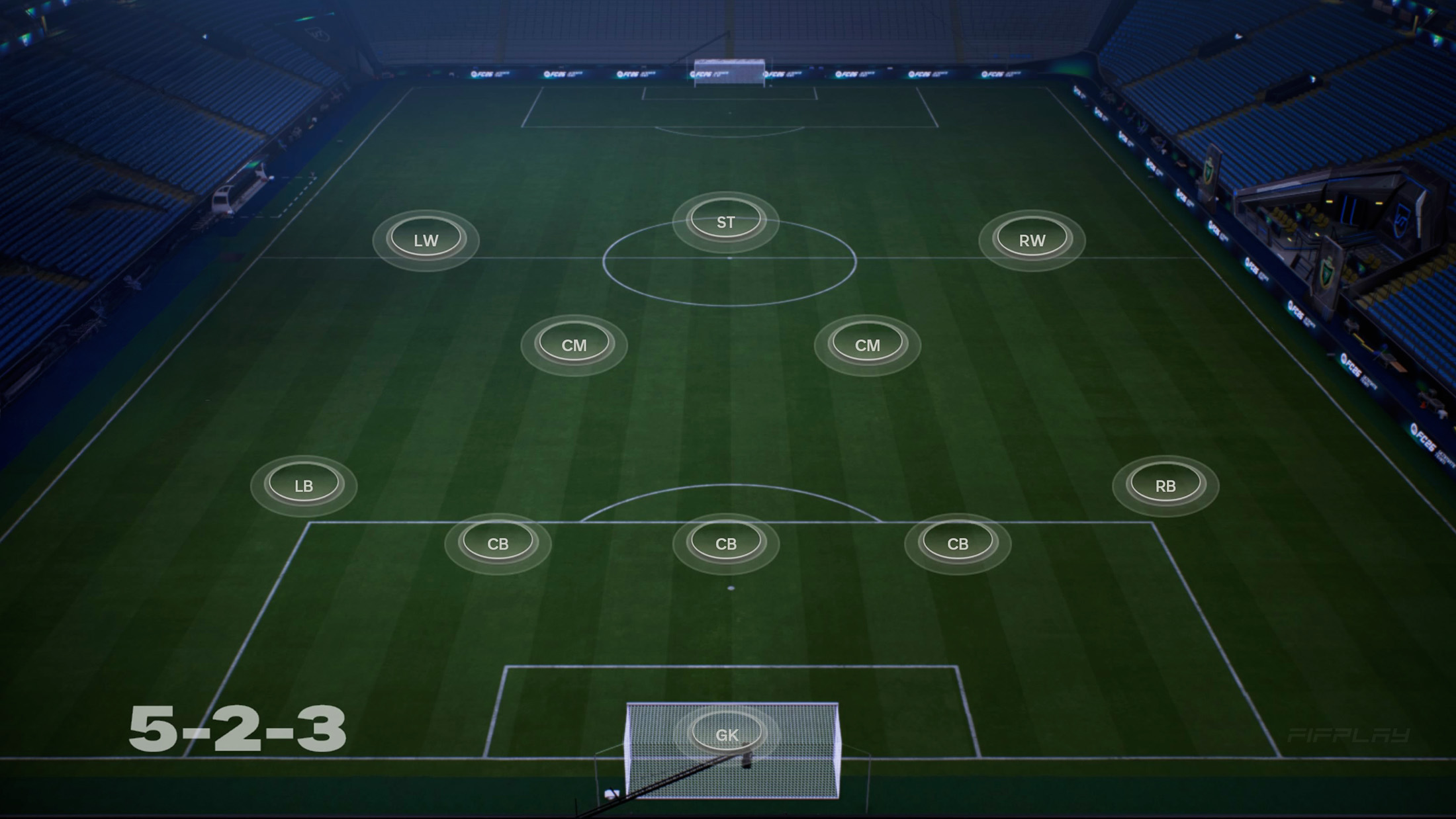
The 5-2-3 is a defensively strong formation built around a compact backline and quick attacking transitions through a front three. With three central defenders supported by two wing-backs, the system provides excellent defensive coverage while still maintaining width in advanced areas. The two central midfielders sit deeper in the middle of the pitch, focusing on protecting the defense, controlling possession, and supporting transitions.
In attack, the front three stretch the opposition by occupying wide and central spaces, making it difficult for defenders to stay compact. The wide forwards can either cut inside to create scoring chances or remain wide to support crossing opportunities, while the central striker acts as the primary finishing threat. The structure naturally supports fast transitions from defense into attack, making the formation particularly dangerous on the counter.
In FC 27 gameplay, the 5-2-3 is ideal for players who prefer defensive discipline combined with quick, direct attacking football. The wing-backs and wide forwards play a major role in creating overloads along the flanks, while the striker benefits from fast breaks and quick service into dangerous areas. At the same time, the compact defensive setup makes it difficult for opponents to break through centrally. However, the two-man midfield can struggle against formations that overload central areas with three or more midfielders.
Key Roles in the 5-2-3
Wing-backs are among the most important players in the formation, requiring stamina, pace, crossing quality, and strong defensive awareness to manage both attacking and defensive responsibilities. Central midfielders need tackling ability, composure, positioning, and reliable passing to protect the backline and control transitions. The striker must combine positioning, composure, movement, and clinical finishing, while the wide forwards should possess pace, dribbling ability, acceleration, and intelligent movement to stretch defenses effectively.
Preferred Team Play Styles
The 5-2-3 performs best with defensive and counter-attacking tactics, allowing the team to absorb pressure before breaking forward quickly through the front three. It also suits direct wide play, using overlaps and crossing opportunities created by the wing-backs and wide forwards.
Advantages and Disadvantages
One of the biggest strengths of the 5-2-3 is its compact defensive structure combined with natural attacking width and dangerous counter-attacking potential. The front three create multiple attacking lanes, while the back five provides strong defensive security. However, the midfield can become outnumbered against systems with extra central players, and the wing-backs face heavy stamina demands due to their constant movement up and down the flanks. The formation can also lose creativity if the forwards become isolated from midfield support.
Key Attributes for Success
Wing-backs should possess stamina, pace, crossing quality, and defensive reliability. Midfielders benefit from tackling ability, vision, composure, and accurate passing under pressure. The striker requires strong finishing, positioning, composure, and movement inside the box. Wide forwards need dribbling ability, acceleration, pace, and intelligent off-the-ball movement, while defenders should combine strength, anticipation, positioning, and discipline to maintain defensive stability.
How to Counter the 5-2-3
Formations such as the 4-3-3 or 4-1-4-1 can overload the midfield and dominate possession, forcing the 5-2-3 deeper into its own half. Quick switches of play are also highly effective, as they can pull the wing-backs out of position and create gaps across the defensive line for attackers to exploit.
Comments
No comments yet. Be the first to share your thoughts!