4-3-3 Flat Formation
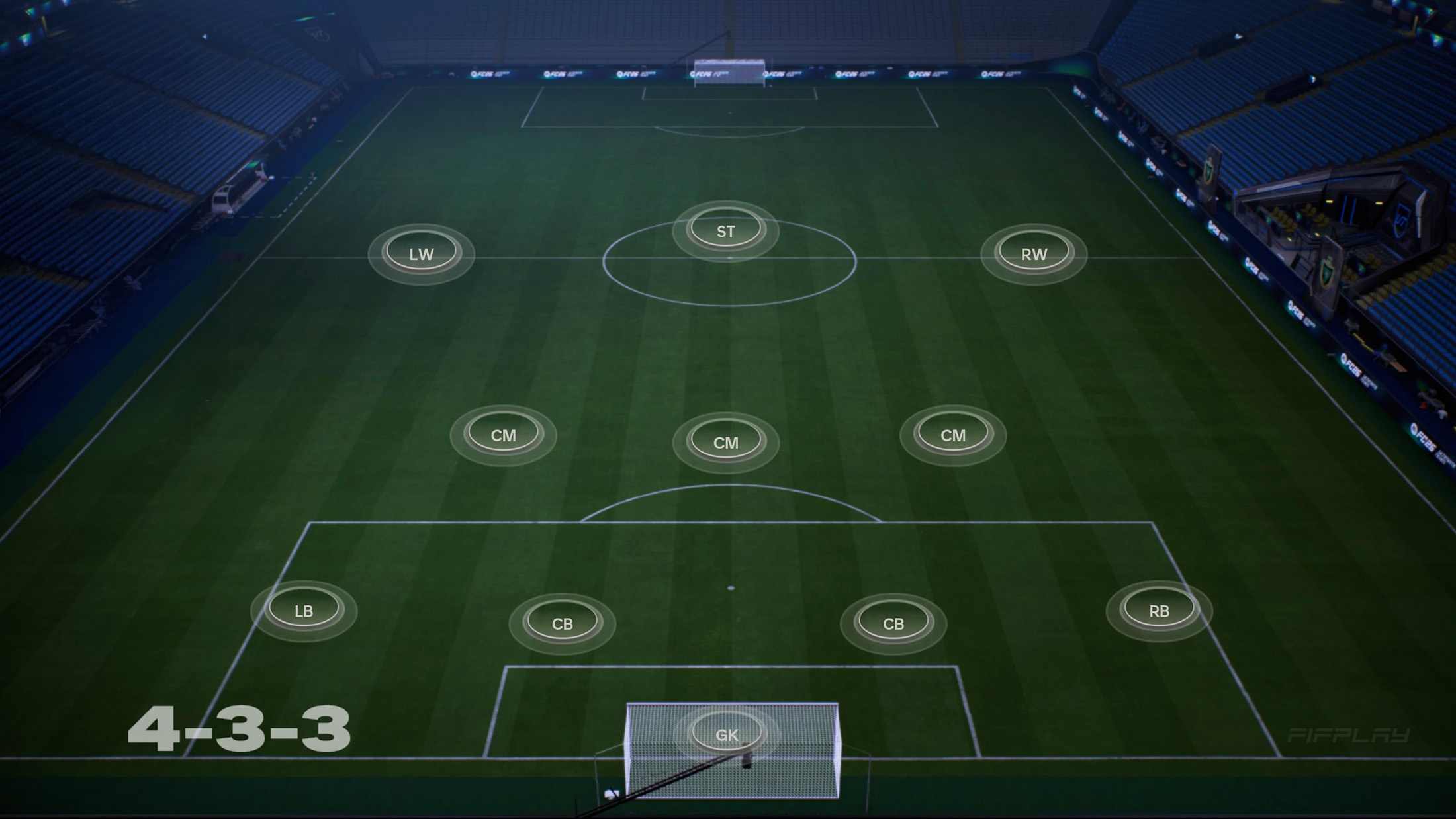
The 4-3-3 Flat is a balanced variation of the traditional 4-3-3 formation, featuring a back four, three evenly positioned central midfielders, two wingers, and a lone striker. This setup creates a stable structure across the pitch, combining midfield control, defensive support, and natural attacking width. Its balanced shape makes it one of the more adaptable systems in FC gameplay.
The midfield trio operates on the same horizontal line, with each player sharing responsibility for defensive coverage, possession control, and attacking support. Unlike other 4-3-3 variations, there is no dedicated holding midfielder or advanced playmaker, meaning the midfield relies on collective balance and movement. The wingers remain the key attacking outlets, using pace, dribbling, and positioning to stretch defenses, create chances from wide areas, or cut inside toward goal. The striker leads the attack centrally, supported by overlapping full-backs and late midfield runs into advanced areas.
In FC 27 gameplay, the 4-3-3 Flat is ideal for players looking for a balanced tactical approach that maintains stability in midfield without losing attacking width. The formation performs well in possession-focused football by offering reliable passing options across the center of the pitch, while also adapting effectively to counter-attacking situations through quick wing play. However, because the midfield lacks a specialist defensive anchor or advanced creator, the system can sometimes struggle against formations with more defined midfield roles.
Key Roles in the 4-3-3 Flat
The central midfielders must be complete and versatile players capable of contributing defensively while also supporting buildup play and attacking transitions. Wingers are the primary creative threats in the formation, requiring pace, dribbling ability, crossing quality, and finishing. The striker should possess intelligent movement, positioning, composure, and reliable finishing in front of goal. Full-backs also play an important role by supporting overlaps and maintaining defensive balance when possession changes hands.
Preferred Team Play Styles
The 4-3-3 Flat performs best with balanced or possession-oriented football built around controlled passing and attacking movement through wide areas. It also adapts well to pressing systems, where the front three can apply pressure high up the pitch while the midfield supports defensive recovery and compactness.
Advantages and Disadvantages
One of the main strengths of the 4-3-3 Flat is its balanced midfield structure combined with natural width and flexible attacking options. The formation offers stability in both attack and defense without heavily committing players forward. However, the lack of a dedicated defensive midfielder or advanced creator can reduce both defensive security and creativity in central areas. The lone striker may also become isolated if support from midfield and the wingers is delayed.
Key Attributes for Success
Midfielders should possess stamina, versatility, ball control, passing quality, and tactical awareness to contribute consistently in all phases of play. Wingers benefit from pace, dribbling ability, crossing quality, and creativity in wide areas. The striker requires finishing, movement, positioning, and composure under pressure. Full-backs need pace, stamina, overlapping ability, and defensive awareness, while center-backs should combine strength, positioning, and composure defensively.
How to Counter the 4-3-3 Flat
Formations built around a strong attacking midfielder, such as the 4-2-3-1, can exploit the lack of a dedicated playmaker or holding midfielder in this setup. Narrow systems like the 4-1-2-1-2 can also overload central areas and force the midfield trio to defend larger spaces than they are comfortable covering.
Comments
No comments yet. Be the first to share your thoughts!