4-3-2-1 Formation
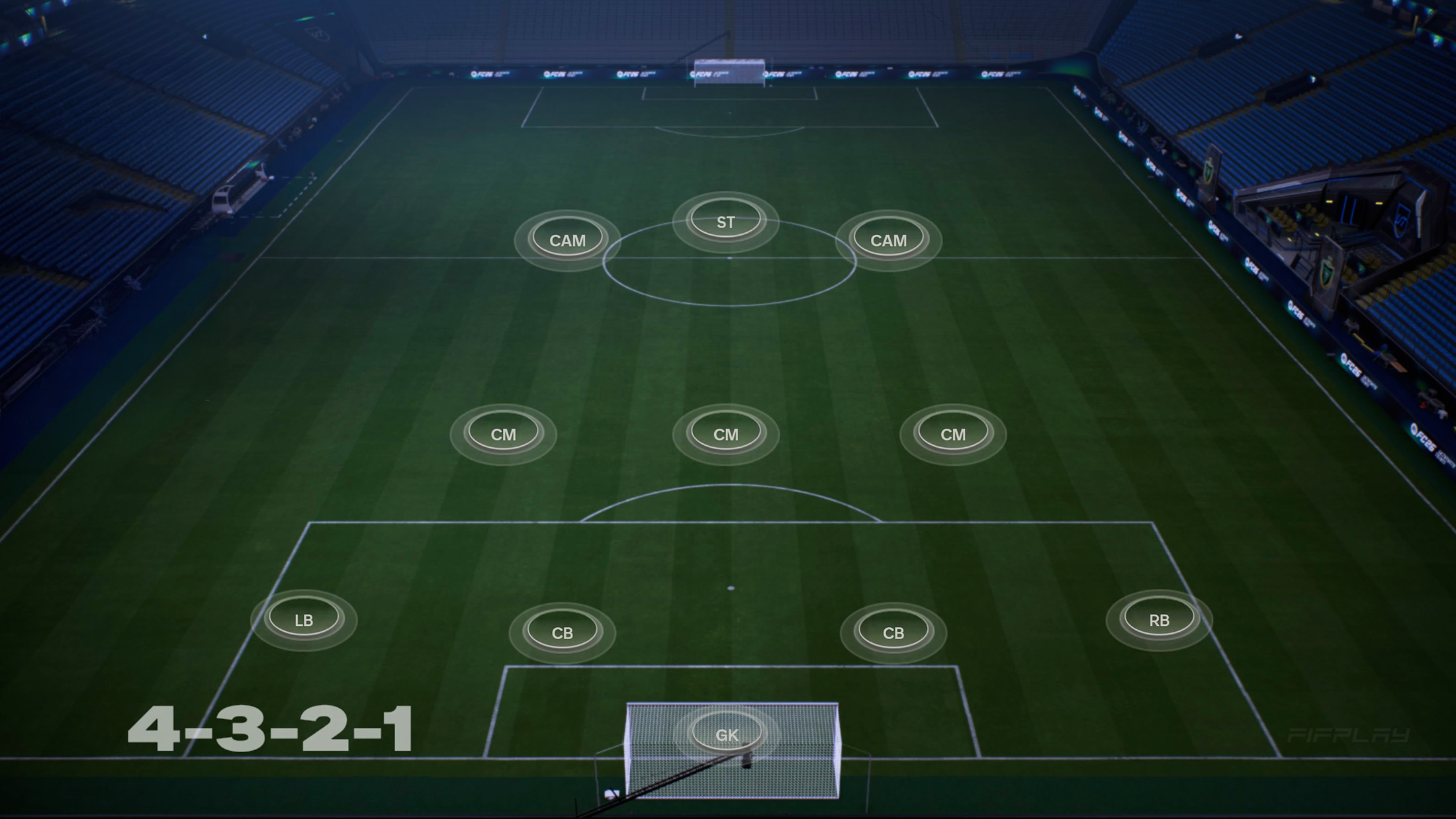
The 4-3-2-1, commonly known as the Christmas Tree formation, is a compact tactical setup built around central dominance and fluid passing combinations. It consists of a back four, three central midfielders, two narrow supporting forwards, and a lone striker leading the attack. The narrow structure allows teams to overload central areas, maintain possession, and create attacking opportunities through quick interplay between midfield and attack.
The midfield trio provides stability and balance, with one midfielder often sitting deeper to protect the defense while the other two contribute to transitions and attacking buildup. Ahead of them, the two supporting forwards operate between the lines, linking play with the striker and creating chances through movement, dribbling, and intelligent passing. The lone striker serves as the focal point in attack, relying on support from the narrow forwards and overlapping full-backs to generate consistent scoring opportunities.
In FC 27 gameplay, the 4-3-2-1 is ideal for players who prefer patient buildup play and controlling matches through the center of the pitch. Its narrow shape creates tight passing triangles that are difficult to defend against, especially when combined with quick one-touch combinations. The formation also offers strong defensive compactness, forcing opponents toward the wings rather than allowing them space through central areas. However, because natural width is limited, full-backs become essential in supporting attacks.
Key Roles in the 4-3-2-1
The central midfielders must combine defensive awareness, stamina, and ball progression to maintain control throughout the match. The supporting forwards are key creative players who require vision, dribbling ability, movement, and finishing quality to influence attacks consistently. The striker should possess intelligent movement, composure, and clinical finishing inside the box. Full-backs also play a crucial role by providing width, supporting overlaps, and delivering crosses into attacking areas.
Preferred Team Play Styles
The 4-3-2-1 performs best with possession-focused football and narrow buildup strategies built around short passing and patient attacking movement. Overlapping full-backs are essential for stretching defenses, while quick central combinations can also make the system highly effective in counter-attacking situations.
Advantages and Disadvantages
One of the biggest strengths of the 4-3-2-1 is its strong central presence, supported by excellent link-up play and a compact defensive structure. The close positioning between players encourages fluid passing combinations and consistent midfield control. However, the formation lacks natural width and depends heavily on full-backs to create attacking space on the flanks. The lone striker can also become isolated if midfield and forward support does not arrive quickly enough.
Key Attributes for Success
Midfielders should possess stamina, positioning, passing quality, and composure under pressure. Supporting forwards benefit from creativity, dribbling ability, movement, and reliable finishing. The striker requires strong movement, composure, positioning, and clinical finishing in front of goal. Full-backs need pace, stamina, crossing ability, and defensive recovery to contribute effectively on both ends of the pitch.
How to Counter the 4-3-2-1
The most effective way to counter the 4-3-2-1 is by stretching the formation with wide systems such as the 4-3-3 or 3-4-3. Attacking through the flanks and overloading wide areas can pull defenders out of shape and create gaps across the backline. Applying pressure on the midfield trio is also effective, as it limits buildup options through the center and reduces support for the lone striker.
Comments
No comments yet. Be the first to share your thoughts!