4-2-1-3 Formation
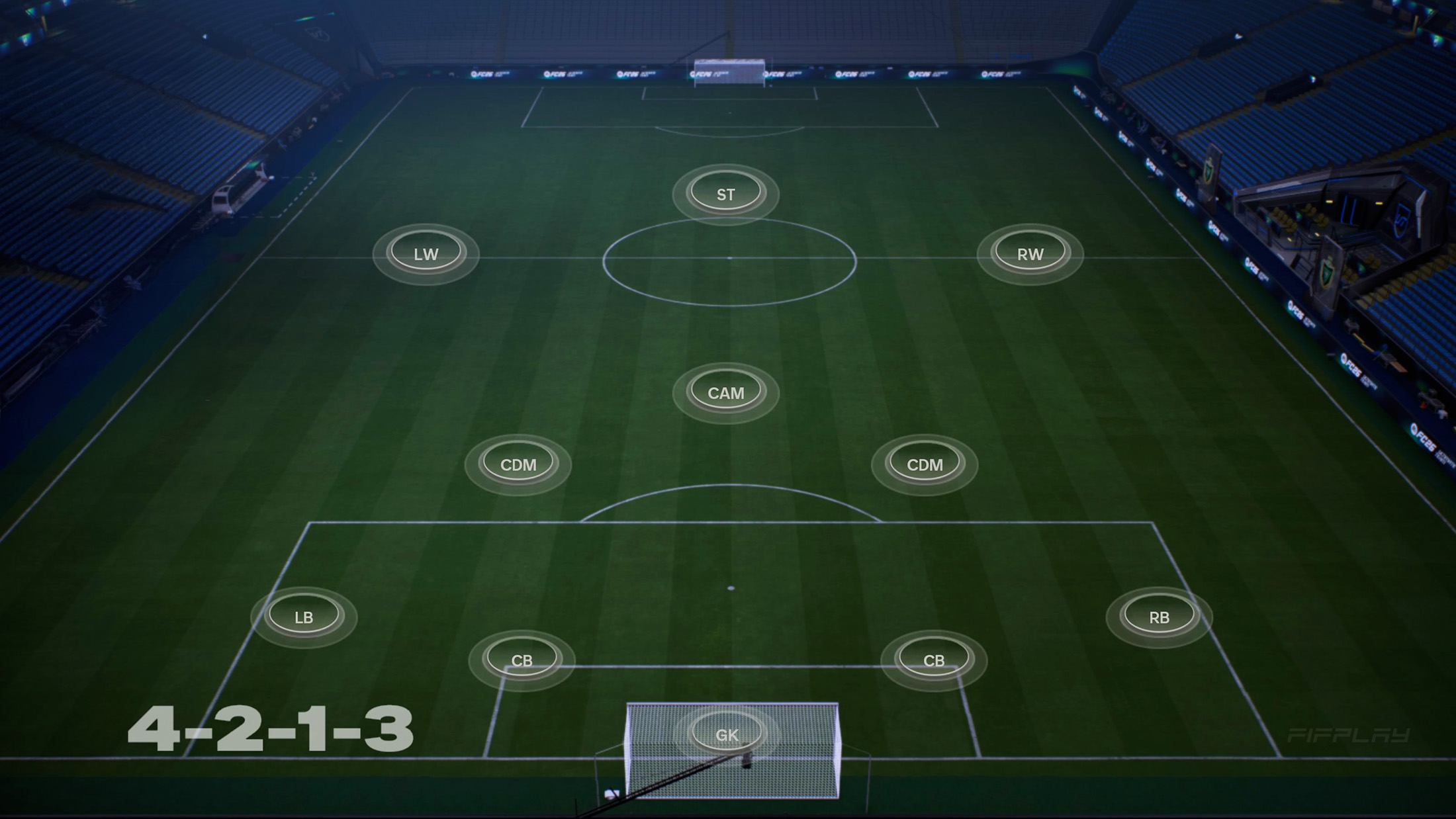
The 4-2-1-3 formation is built for an aggressive attacking style while still maintaining strong defensive organization. A back four provides the defensive structure, while the two holding midfielders sit in front of the defense to break up attacks, intercept passes, and maintain balance across the pitch. These midfielders also play a key role in starting attacking moves by progressing the ball quickly into advanced areas.
Positioned ahead of them, the CAM acts as the creative engine of the team, linking midfield with the attacking line and creating chances through intelligent movement and passing. The front three, made up of a central striker and two wide forwards, stretches the opposition defense with pace, width, and constant movement in the final third. This setup allows the team to attack with freedom while still retaining defensive stability through the midfield structure.
In FC 27 gameplay, the 4-2-1-3 is ideal for players who enjoy controlling possession and creating a high volume of attacking opportunities. The double pivot in midfield offers security and balance, giving the CAM and front three the freedom to attack aggressively. The formation is particularly effective for sustained pressure and fluid attacking combinations, although it relies heavily on disciplined midfielders and technically gifted attackers to perform consistently.
Key Roles in the 4-2-1-3
The defensive midfielders are essential for protecting the backline, recovering possession, and initiating buildup play from deeper positions. The CAM should possess creativity, vision, and the ability to break defensive lines with passing and movement. Wide attackers require pace, dribbling ability, and quality delivery in attacking situations, while the striker must combine intelligent movement with strong finishing inside the box.
Preferred Team Play Styles
The 4-2-1-3 performs best with possession-oriented and attacking play styles built around short passing, fluid movement, and overlapping runs from wide areas. It also adapts well to pressing systems, as the midfield and front line can quickly regain possession and maintain attacking pressure high up the pitch.
Advantages and Disadvantages
One of the main strengths of the 4-2-1-3 is the balance it creates between attacking freedom and defensive protection. The formation offers strong central creativity, wide attacking options, and multiple passing lanes in advanced areas. However, narrow formations can overload the midfield if the defensive midfielders become isolated, and the system depends heavily on the CAM to provide creativity. The holding midfielders also require high stamina and positional discipline to maintain balance throughout the match.
Key Attributes for Success
The CDMs should possess strong stamina, tackling ability, positioning, and composure under pressure. The CAM benefits from vision, creativity, passing accuracy, and close control in tight spaces. Wingers require pace, dribbling, agility, and crossing quality to stretch defenses effectively. The striker should excel in finishing, strength, positioning, and movement off the ball. Defenders need awareness, composure, physicality, and strong defensive positioning to handle transitions.
How to Counter the 4-2-1-3
Formations such as the 4-4-2 or 4-3-3 can challenge the 4-2-1-3 by pressing the defensive midfielders aggressively and creating overloads in wide areas. Quick counter-attacks are also effective, especially when the formation commits players forward during sustained attacking pressure.
Comments
No comments yet. Be the first to share your thoughts!