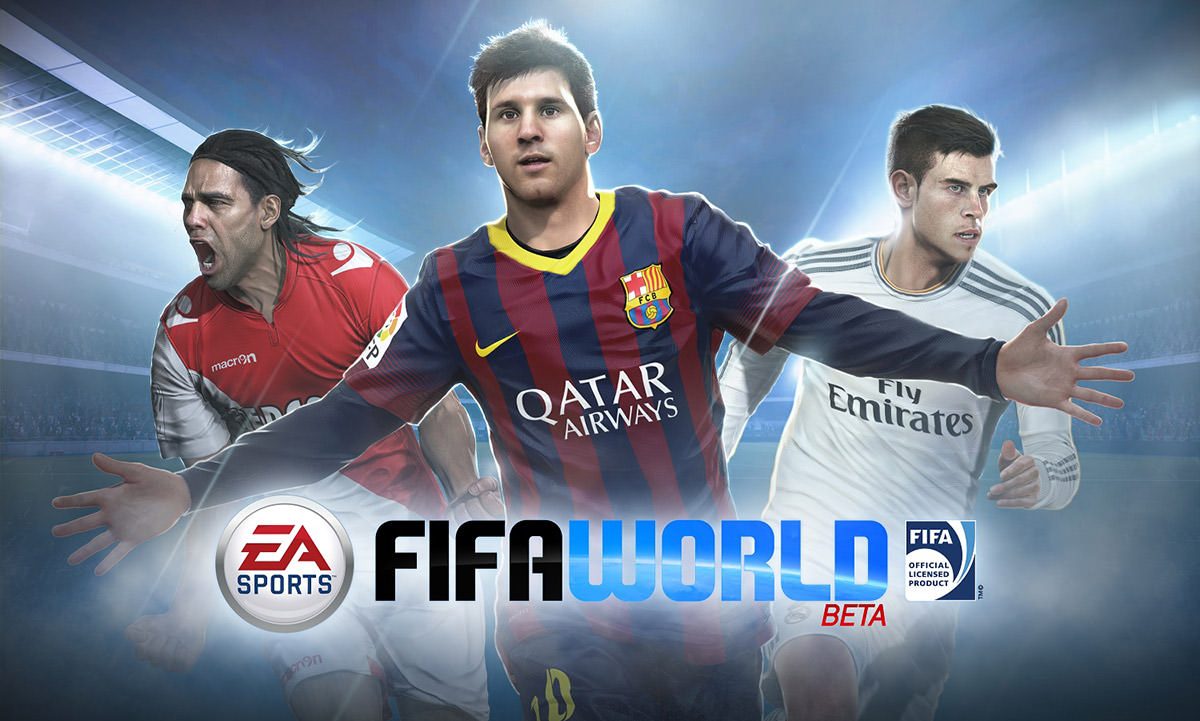
EA Sports FIFA World was Electronic Arts' attempt to build a full FIFA experience around a free-to-play, online PC model. Developed by EA Canada, the game combined licensed clubs and players, FIFA Ultimate Team, online Seasons, single-player competitions, a live Transfer Market and regularly updated football content in a downloadable game designed to run on relatively modest PCs.
FIFA World was announced in 2013 and went through several testing phases before its Global Open Beta began on 20 May 2014. More than 1.5 million players had registered during the earlier closed and limited open-beta periods. EA continued developing the game throughout 2014, including a major gameplay-engine update in November, but FIFA World never progressed into the long-term commercial service EA originally envisioned. Development was discontinued in 2015 and the game went offline on 14 July 2015.
| Title | EA Sports FIFA World |
|---|---|
| Developer | EA Canada |
| Publisher | Electronic Arts |
| Platform | Windows PC |
| Business Model | Free-to-play with optional in-game purchases |
| Announced | August 2013 |
| Global Open Beta | 20 May 2014 |
| Major Gameplay Engine Update | November 2014 |
| Online Requirement | Persistent internet connection and Origin account |
| Status | Discontinued |
| Servers Closed | 14 July 2015 |
What Was FIFA World?
FIFA World was not simply a demo of the main FIFA series and it was not a browser game. It was a downloadable Windows football game built specifically around EA's free-to-play strategy. The idea was to make a recognisable FIFA experience available to people who did not own a console or a high-end gaming PC, while keeping the game connected to real football through licensed leagues, live content and Ultimate Team.
When EA first announced the project in August 2013, FIFA World was initially being developed with Brazil and Russia as important launch markets. Closed beta testing began during 2013, and the project subsequently expanded beyond those territories. Four closed-beta sessions and a limited open beta took place before EA opened the game globally in May 2014.
At the start of the Global Open Beta, EA advertised more than 16,000 players and 600 clubs from more than 30 officially licensed leagues. This was one of FIFA World's biggest attractions. Despite being free to download, it retained the real clubs, players, kits and league licensing associated with the FIFA series rather than presenting a stripped-down fictional football game.
Global Open Beta
The Global Open Beta began on 20 May 2014. It represented the point at which FIFA World became widely accessible rather than being restricted to selected testing groups and territories.
EA described the beta as an ongoing development process rather than a finished product. Player feedback was used to determine updates and future features, which made FIFA World an early example of EA treating a FIFA title as a continuously evolving live service rather than a conventional annual boxed release.
Producer Alex Grimbley explained that the free-to-play format was intended to give new PC players access to the FIFA experience while giving existing FIFA players another way to play. By August 2014, EA reported more than 3.5 million registrations from over 180 countries and more than 45 million matches played since the project had been announced.
FIFA World Game Modes
FIFA World was built around two main ways of playing: using licensed real-world teams in League Teams or creating a personal club in FIFA Ultimate Team. Around those two pillars were online and single-player Seasons, tournaments, friend challenges and regularly updated objectives. The selection was smaller than a full annual FIFA release, but it suited FIFA World's free-to-play structure and gave players several ways to progress without a traditional Career Mode.
| Mode | Type | Description |
|---|---|---|
| League Teams | Online | Choose a licensed real-world club or national team and compete through a divisional promotion and relegation system from Division 10 to Division 1. |
| Ultimate Team | Single-player / Online | Create a custom club, collect players through packs or the Transfer Market and build squads for different FUT competitions. |
| Ultimate Team Online Seasons | Online | Take your Ultimate Team against other players and attempt to progress from Division 10 to Division 1. |
| Ultimate Team Single Player Seasons | Single-player | Play through the divisional structure against AI-controlled teams while earning rewards and progressing into stronger divisions. |
| Single Player Tournaments | Single-player | Enter knockout competitions with an Ultimate Team and face AI-controlled opponents, with additional tournaments and rewards becoming available through progression. |
| Featured / Limited-Time Tournaments | Single-player / Live Content | Special tournaments made available for limited periods, often connected to current events in real-world football. |
| Match Invites | Online | Challenge friends directly instead of relying on normal online matchmaking. |
| Team of the Week Challenge | Single-player | Challenge an AI-controlled squad made up of players selected for FIFA World's current Team of the Week. |
League Teams
League Teams was the main option for players who wanted to use real clubs and national teams rather than build an Ultimate Team. The mode used an Online Seasons structure, placing the player in Division 10 and challenging them to work towards Division 1 through promotion and relegation.
The important difference from Ultimate Team was that League Teams did not revolve around collecting player items or constructing a fantasy squad. Players selected from FIFA World's licensed teams and took that side into online competition against other users.
League Teams was also connected to FIFA World's free-to-play economy through Match Credits. Players had five Match Credits available, and playing a League Teams match consumed one credit. Credits regenerated over time, while additional credits could also be obtained through the game's systems. This placed a limit on continuous League Teams play that did not exist in the same form in the conventional full-price FIFA games.
FIFA World Ultimate Team
Ultimate Team was the other major pillar of FIFA World and contained several ways to play rather than functioning as a single match type. Players created their own club and assembled squads using footballers acquired from packs or FIFA World's live Transfer Market.
Coins earned through matches could be spent on packs and Transfer Market items, while FIFA Points acted as the paid currency. Players could also customise their club with kits, badges, stadiums and match balls, manage contracts and positions, and use consumable items to alter aspects of their squad.
Once a team had been assembled, it could be used across online and single-player competitions. This made Ultimate Team the most substantial part of FIFA World, combining squad building, an online economy and actual match play within the same progression system.
Ultimate Team Online Seasons
Online Seasons allowed players to take their custom Ultimate Team against squads created by other FIFA World users. Like League Teams, progression was based around a ten-division structure running from Division 10 to Division 1.
Results determined whether a club earned promotion, remained in its current division or was relegated. Moving through the divisions therefore gave Ultimate Team players a long-term competitive objective beyond simply collecting stronger footballers.
The major difference between the two online Seasons experiences was the team itself. League Teams used licensed real-world sides, while Ultimate Team Online Seasons used the squad each player had personally constructed.
Ultimate Team Single Player Seasons
Players who preferred not to compete online could take their Ultimate Team into Single Player Seasons. The basic idea remained similar to Online Seasons, but the opposition was controlled by the computer rather than another FIFA World player.
Single Player Seasons also used a ten-level divisional ladder. Different seasons could place the player's squad against selections of licensed teams, with objectives and rewards attached to progression. It provided a structured way to develop an Ultimate Team while playing entirely against AI opposition.
This was particularly useful for newer players. A squad could be strengthened and experimented with in single-player competition before being taken into the more unpredictable environment of Online Seasons.
Single Player Tournaments
Tournaments offered a different form of single-player progression. Instead of accumulating results across a league-style season, players entered knockout competitions and attempted to advance through the bracket to win the tournament.
FIFA World included both permanent and temporary tournament content. Winning and progressing through available competitions could unlock additional tournaments and produce rewards that could be reinvested into the player's Ultimate Team.
Temporary tournaments were particularly suited to FIFA World's live-service design. EA could introduce competitions connected with events taking place in real football, giving players new single-player content without requiring a separate game or expansion.
Featured and Limited-Time Tournaments
Featured Tournaments allowed FIFA World to react to the football calendar. Instead of every competition remaining permanently available, EA could rotate special events into the game for a limited period.
These events helped distinguish FIFA World from a traditional static football game. A major real-world competition or other football event could be reflected inside FIFA World through new tournament content, encouraging players to return regularly to see what was available.
The idea worked alongside Limited Time Accomplishments and Team of the Week content to make the game feel connected to the current football season rather than frozen at the point when it was downloaded.
Match Invites and Playing Against Friends
FIFA World was not limited to competitive matchmaking. Match Invites allowed users to challenge friends directly, providing a straightforward way to arrange an online match against someone they knew.
This complemented the more structured competitive modes. Seasons were about progression through divisions, while Match Invites were better suited to direct friend-versus-friend matches where league position was not the main reason for playing.
Team of the Week Challenge
Ultimate Team's connection with real football also appeared through Team of the Week. EA selected players based on notable real-world performances and released upgraded versions of those footballers as special items.
FIFA World also allowed players to challenge the current Team of the Week as an AI-controlled squad. Beating that side provided a way to earn rewards while testing an Ultimate Team against a stronger themed opponent.
The squad changed as new Teams of the Week were released, giving the challenge a rotating character rather than making it a permanently identical single-player match.
Accomplishments and Dynamic Challenges
Accomplishments were not a conventional match mode, but they were an important part of how FIFA World encouraged players to use its different modes. They provided objectives covering areas such as gameplay, squad management and the Transfer Market, with rewards available for completing the required tasks.
EA also introduced dynamic and limited-time Accomplishments inspired by events in real football. This allowed objectives to change throughout the season and provided another reason to return to the game even after a player had established an Ultimate Team or reached the higher divisions.
Accomplishments therefore worked across FIFA World's wider structure rather than replacing Seasons or Tournaments. They gave players additional targets while participating in the game's existing activities.
What FIFA World Did Not Have
FIFA World should not be confused with a free version of the complete console FIFA experience. It did not include the full selection of modes found in the annual FIFA releases of the period, and most notably it did not have a traditional Career Mode.
There was no multi-season Manager Career in which the player controlled transfers, contracts, league campaigns and the long-term development of a real club in the same way as the main FIFA series. FIFA World's long-term progression instead came from climbing divisions, developing an Ultimate Team, completing tournaments and Accomplishments, and participating in its changing online content.
That narrower focus was deliberate. FIFA World was designed as an always-connected free-to-play football service, with League Teams providing access to licensed clubs and countries while Ultimate Team supplied the collection, squad-building and economy systems that could keep a player's club developing over time.
Gameplay
FIFA World was designed to deliver familiar FIFA gameplay without demanding the hardware required by the newest full-price PC releases of the period. EA initially promoted it as featuring its FIFA HD console gameplay, adapted for a free-to-play PC audience and capable of running on an average-spec laptop or desktop.
Players could use a controller, keyboard or keyboard-and-mouse setup. This was important to the concept because FIFA World was intended to reach a wider PC audience, including players who did not necessarily own a traditional gamepad.
The gameplay was also not static throughout the game's life. EA used the beta period to make substantial changes, culminating in FIFA World's largest technical update in November 2014.
Gameplay Engine
On 6 November 2014, EA announced that FIFA World had received a new gameplay engine. It was much more than a small balancing patch and was described by EA as the game's biggest update to that point.
The revised gameplay incorporated several features that had already appeared in the main FIFA series. Attacking Intelligence improved the way teammates analysed attacking situations and positioned themselves for forward moves. Complete Dribbling gave players more precise control when facing defenders, while First Touch Control introduced greater variation into how footballers received the ball instead of producing consistently clean first touches.
Defensive AI was also improved, particularly in marking and tracking runs. An updated Player Impact Engine expanded the physical side of tackles and collisions, while Tactical Free Kicks allowed as many as three attacking players to be positioned around the ball for more elaborate set-piece routines.
The update also added more than a thousand gameplay animations according to EA's November announcement, alongside visual and presentation changes. Commentary adapted from FIFA 15 was introduced, six additional stadiums were added and the interface received a more modern appearance.
By this stage, FIFA World was significantly different from the version players had encountered during its earlier testing periods. That constant evolution was central to the project: EA could change the underlying game without waiting for a new annual FIFA release.
FIFA Ultimate Team in FIFA World
FIFA Ultimate Team was one of the foundations of FIFA World rather than a minor secondary mode. Players could build a custom squad using footballer items, enter matches with that team and continue improving the club through rewards, packs and the Transfer Market.
Coins earned through play could be used within the Ultimate Team economy, while FIFA Points provided the game's paid currency. Packs contained players and other club items, and FIFA World's live Transfer Market allowed users to buy and sell items with other players.
The familiar Ultimate Team management systems were also present. Players could change kits, badges, balls and stadiums, manage contracts and positions, and use consumable items. Team of the Week content connected the mode with performances in real football, with upgraded versions of selected players becoming available as special items.
Ultimate Team could be played against both human and computer-controlled opposition. Online Seasons provided a competitive divisional structure, while single-player content allowed players to develop their Ultimate Team without having to play every match against another person.
League Teams and Seasons
FIFA World was not limited to Ultimate Team. Players could also use licensed real-world teams through its League Teams structure.
The competitive progression system was organised around ten divisions. Players began in Division 10 and attempted to earn enough results to move through the divisions towards Division 1. Promotion and relegation gave individual matches a wider purpose instead of treating every online fixture as an isolated friendly.
This mode was particularly important for players who wanted to use established clubs rather than build an Ultimate Team from cards. It meant FIFA World supported two different approaches to progression: creating a personalised FUT club or competing with licensed football teams.
League Team matches were tied to a Match Credits system. Players had a limited number of credits available, with credits replenishing over time. This was one of the free-to-play mechanisms that distinguished FIFA World from the traditional retail FIFA games of the period.
Tournaments
Tournaments provided a single-player alternative to the divisional structure. Players faced AI-controlled clubs and national teams through tournament brackets, attempting to reach the final, win the competition and collect rewards.
EA also used Featured Tournaments to connect FIFA World with real football. Temporary competitions could be introduced around current events, giving the live service a reason to change from week to week rather than presenting exactly the same tournament selection indefinitely.
National teams became part of FIFA World's single-player tournament content, which was particularly relevant during the 2014 World Cup period. This helped the game respond to major football events while they were taking place.
Accomplishments
Accomplishments were challenges created specifically for FIFA World. Instead of progression depending entirely on winning matches, players could complete objectives related to gameplay, tournaments, the Transfer Market and other areas of the game.
Limited Time Accomplishments were especially important to FIFA World's live-service concept. EA could create tasks inspired by events in real football and offer rewards for completing them within a limited period.
This gave players a reason to return regularly even when they were not concentrating on climbing the Seasons divisions. Coins, packs and experience could be connected to these objectives, tying Accomplishments into the wider progression system.
Match Invites
Match Invites allowed players to challenge friends directly online. This filled an important gap between competitive Seasons and playing against the AI, because users could arrange matches against people they already knew rather than relying exclusively on matchmaking.
For a game built around a persistent online community, direct friend matches were an obvious but important feature. FIFA World was intended to function as an ongoing football platform, and playing against friends was part of that social focus.
The Social Hub
The Social Hub acted as a central area for the community features surrounding FIFA World. Players could interact with game content and see activity connected to friends, while EA continued experimenting with ways of making the game more social.
Highlight sharing was later expanded during FIFA World's development. Players could select match highlights and share them, including through external services such as YouTube. This reflected EA's broader goal of treating FIFA World as a connected service rather than a football game that effectively ended once a match was over.
The Transfer Market
The live Transfer Market was essential to FIFA World Ultimate Team. Rather than obtaining every footballer randomly from packs, players could search the market for specific items offered by other users.
That created an economy around player cards and other Ultimate Team content. Users could buy footballers needed for their squads, sell unwanted items and attempt to use the market strategically to improve their clubs.
Because FIFA World was permanently connected, the Transfer Market was part of the game's persistent online environment. Prices and available items could change as players bought and listed content, making squad building an activity that extended beyond the matches themselves.
Live Content and the 2014-15 Season
FIFA World was built to change alongside real football. Player ratings, kits, club content and Ultimate Team items could be updated without requiring players to purchase a new game.
A major 2014-15 season update allowed players to use new-season Ultimate Team items while retaining players they had collected from the previous season. That approach was significant because the traditional FIFA model reset players into a separate new game every year. FIFA World was instead attempting to maintain a persistent service across football seasons.
Licensing could still change. Brazilian league clubs were removed during 2014 after licensing arrangements changed, while the Turkish Süper Lig and its clubs were added as FIFA World continued to develop. By November 2014, EA described the game as featuring real players and clubs from 33 leagues.
FIFA World Languages
At the Global Open Beta launch, FIFA World supported nine languages: English, German, French, Russian, Spanish, Mexican Spanish, Brazilian Portuguese, Polish and Turkish.
Italian support was later introduced alongside the November 2014 engine update, including a localised interface and Italian match commentary. That expanded FIFA World to ten supported languages as EA continued pushing the game towards a broad international audience.
FIFA World System Requirements
Accessibility was one of the main selling points of FIFA World. EA repeatedly emphasised that the game was intended to run on an average-spec laptop or desktop rather than requiring an expensive gaming PC. A broadband connection was mandatory because FIFA World was an online service.
| Component | Recommended Specification During Open Beta |
|---|---|
| Operating System | Windows XP SP3, Windows Vista or Windows 7 |
| Processor | Intel Core 2 Quad Q6600 2.4 GHz or AMD Athlon II X4 600e 2.2 GHz |
| Memory | 2 GB RAM |
| Graphics | GeForce 8800 GT or Radeon HD 3870 class, DirectX 9.0c / Shader Model 3.0 |
| Disk Space | Approximately 3.96 GB |
| Internet | Broadband connection required |
An Origin account and the Origin client were also required. FIFA World therefore had a relatively low hardware barrier compared with contemporary high-end PC games, but it could not be played as a permanently offline football game.
How FIFA World Was Different from the Main FIFA Games
| Feature | FIFA World | Main FIFA Series of the Period |
|---|---|---|
| Platform | Windows PC | PC and multiple consoles, depending on release |
| Price Model | Free-to-play | Full-price annual release |
| Internet | Persistent connection required | Offline and online play available |
| Release Structure | Continuously updated service | New standalone game released annually |
| Ultimate Team | Central part of the game | One of several major modes |
| Career Mode | No traditional full FIFA Career Mode | Major mode in the main series |
| Licensed Clubs and Players | Yes | Yes |
| Live Transfer Market | Yes, through Ultimate Team | Yes, through Ultimate Team |
| Hardware Target | Designed for relatively modest PCs | Varied according to platform and generation |
| Long-Term Model | One evolving online game | Annual sequels |
The distinction is important. FIFA World was not intended to replace every feature of FIFA 14 or FIFA 15. Its focus was narrower, concentrating on accessible match play, Ultimate Team, online competition, licensed League Teams and regularly refreshed content.
There was no traditional Career Mode comparable with the main FIFA games, where a player could manage a club across seasons with transfers, contracts, league tables and broader club management. FIFA World's progression was instead built around Seasons, Ultimate Team, tournaments, Accomplishments and the online economy.
FIFA World Trailer
Official FIFA World Trailer
Why FIFA World Never Received a Traditional Full Release
FIFA World remained associated with its beta development period throughout its life. EA kept expanding the game, and the November 2014 engine overhaul showed that significant resources were still being invested in it. By then, more than 50 million matches had been played by users from over 180 countries.
The project nevertheless failed to develop enough momentum for EA to continue taking it towards a full commercial launch. On 15 April 2015, Electronic Arts announced that development and support would be wound down for four of its free-to-play PC games: FIFA World, Battlefield Heroes, Battlefield Play4Free and Need for Speed World.
The announcement gave players approximately 90 days before the services closed. FIFA World subsequently went offline on 14 July 2015. Because the game required a persistent connection to EA's service, the shutdown effectively made the original game unavailable to play through its intended official infrastructure.
When Did FIFA World Shut Down?
FIFA World's servers closed on 14 July 2015. EA's official online service-update records list FIFA World under that date, confirming the end of the service.
This makes FIFA World unusual within FIFA history. Most older FIFA games can still be played locally after their online services disappear, provided the player owns compatible hardware and a copy of the game. FIFA World was designed as an online free-to-play service, so its closure had a much more fundamental effect.
The original links that invited players to register, download FIFA World or begin building a club should therefore be treated as historical links. FIFA World is no longer an active EA football game and cannot officially be downloaded and played through the service described in its 2014 promotional material.
FIFA World Timeline
| Date | Event |
|---|---|
| 8 August 2013 | EA announces FIFA World as a free-to-play downloadable PC football game, initially highlighting Brazil and Russia. |
| 2013 | Closed beta testing begins. |
| 20 May 2014 | FIFA World enters Global Open Beta after closed-beta sessions and a limited open beta. |
| June 2014 | World Cup-related content expands the use of national teams and tournaments. |
| August 2014 | EA announces a major new gameplay engine and reports more than 3.5 million registrations. |
| 2014 | FIFA World receives continued live updates, new content, sharing features and league changes. |
| November 2014 | The new gameplay engine launches with Attacking Intelligence, Complete Dribbling, First Touch Control, Tactical Free Kicks, improved physics, additional animations and presentation upgrades. |
| 15 April 2015 | EA announces that FIFA World development and support will end. |
| 14 July 2015 | FIFA World goes offline permanently. |
Why FIFA World Matters in FIFA History
FIFA World had a short life, but its concept makes it an interesting part of the series. It arrived years before EA's football business became as heavily centred on persistent online content as it is today, and it experimented with several ideas that suited that direction: a continuously updated football platform, live challenges tied to real matches, a persistent Ultimate Team economy, regular content updates and a game that did not need to be replaced by a newly purchased disc every year.
It was also an attempt to reach a different type of FIFA player. Instead of requiring a console and a full-price copy of the latest game, FIFA World offered licensed FIFA football as a free Windows download capable of running on relatively modest hardware. For players in markets where consoles or high-end gaming PCs were less accessible, that was an important part of the pitch.
The experiment ultimately did not last. FIFA World never became the permanent PC football platform EA had been developing, and its dependence on online infrastructure meant that the 2015 shutdown ended the game completely as an official service. Even so, it remains a distinctive entry in FIFA history and one of EA Sports' clearest early attempts to turn FIFA from an annual product into an evolving free-to-play football service.
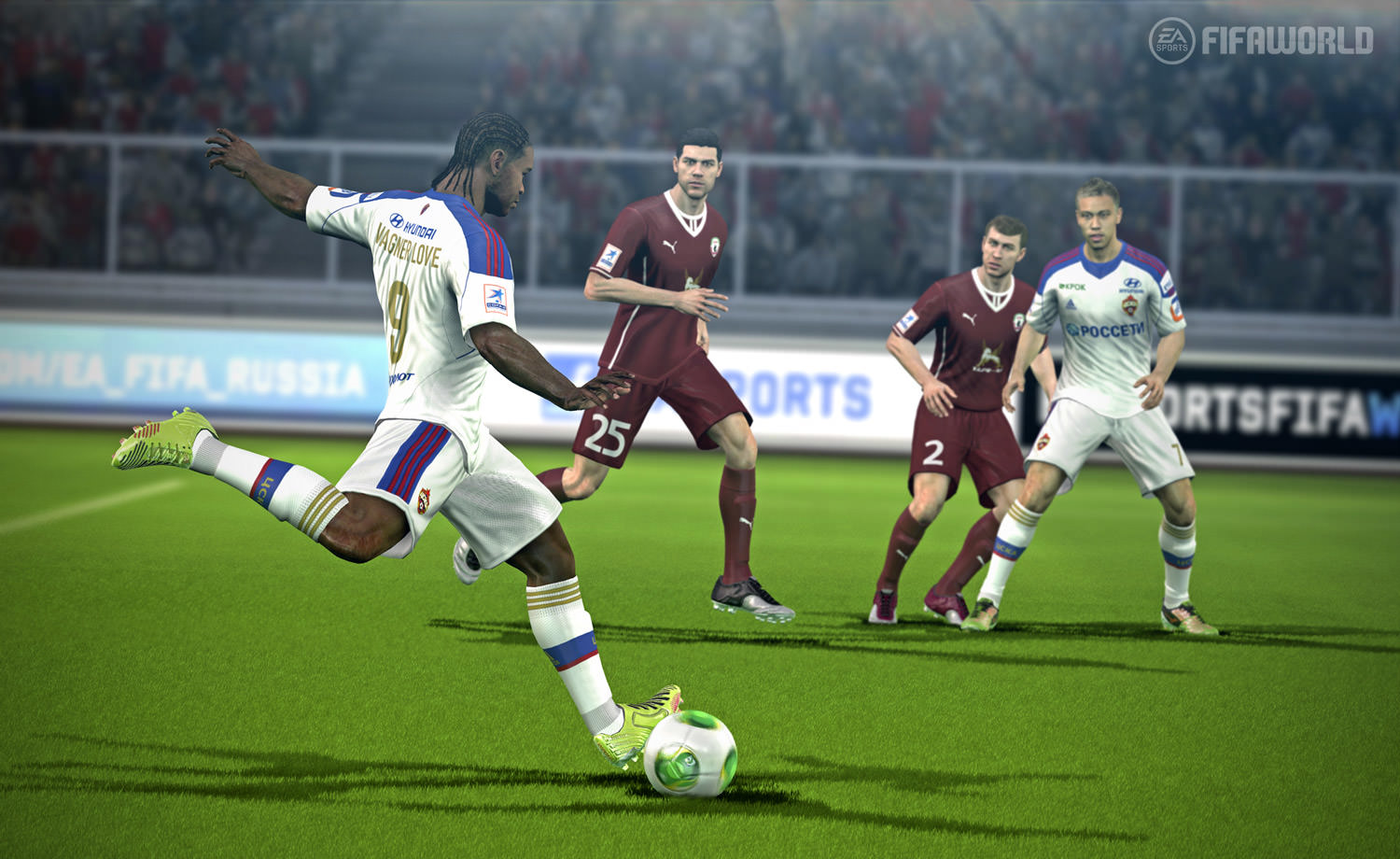
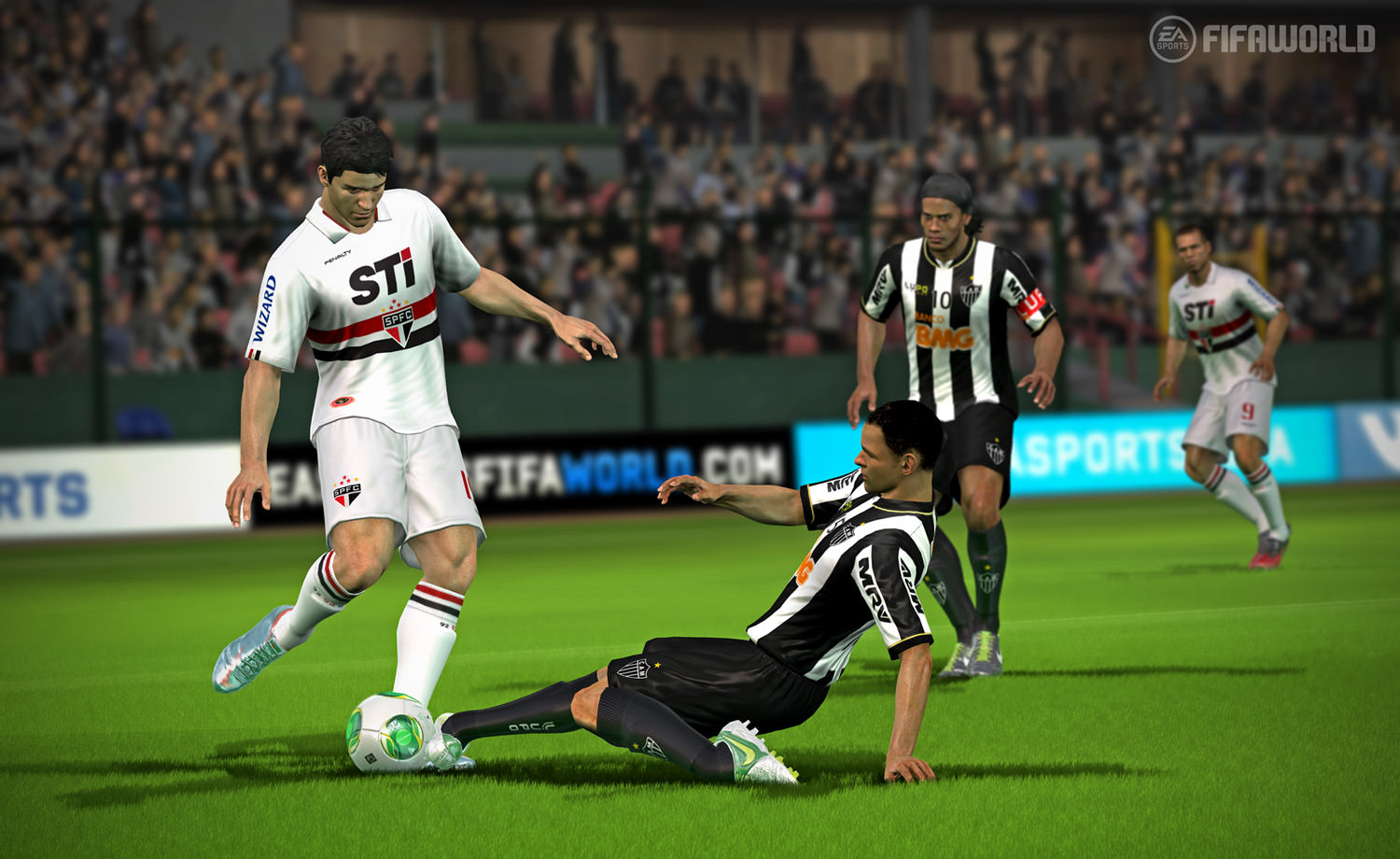
FIFA World Screenshots




Comments 7
Wäre schön diese Version wieder online zu sehen.