3-4-1-2 Formation
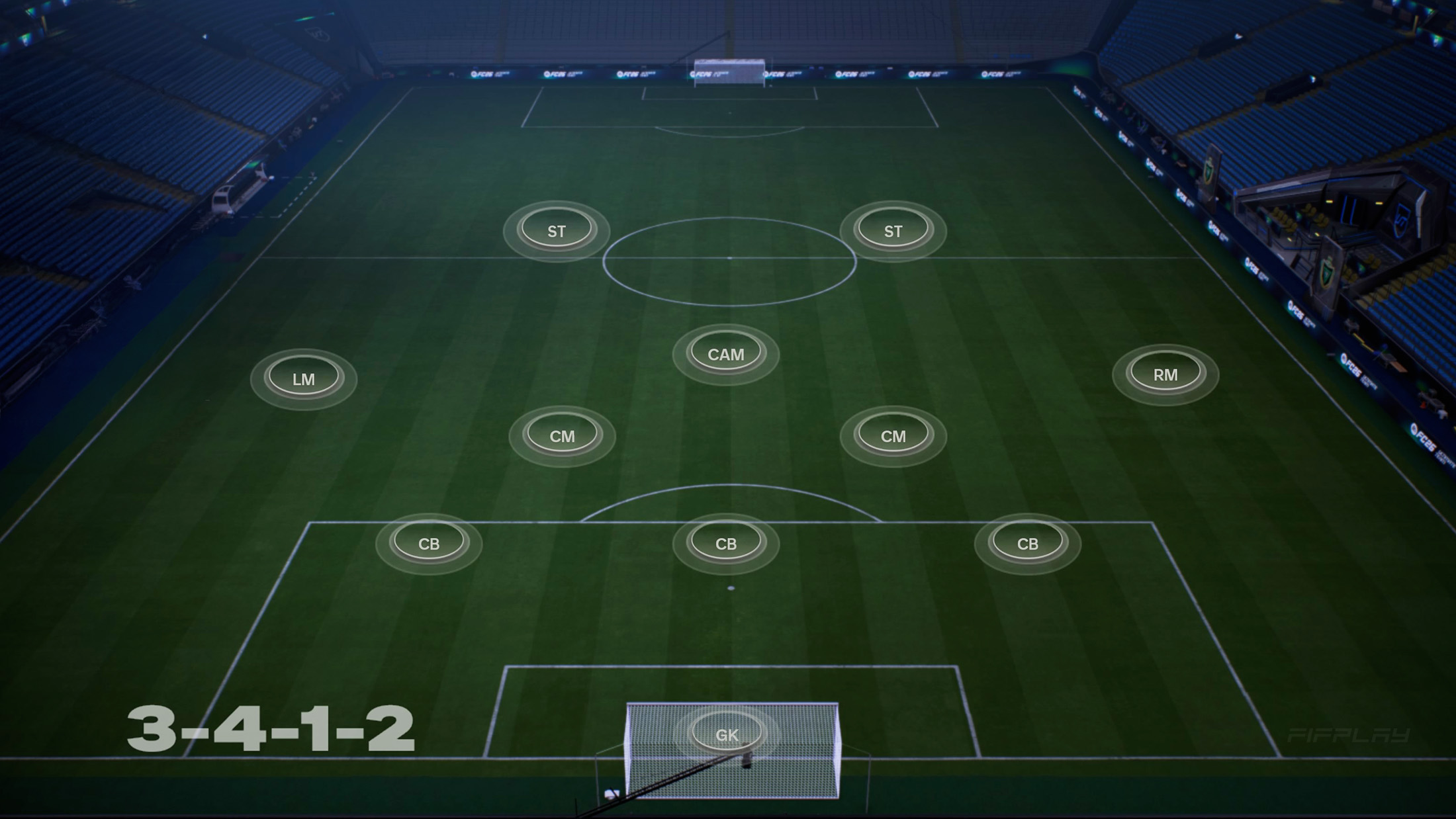
The 3-4-1-2 is a variation of the 3-5-2 formation, distinguished by the inclusion of an advanced attacking midfielder, often referred to as the number 10. Behind them, three central defenders and two wing-backs provide defensive stability and width, while two central midfielders control tempo and recycle possession. This structure creates a clear link between midfield and attack, enabling more creativity and incisive passing in advanced areas.
The lone playmaker plays just behind two strikers, serving as the creative hub of the team. The wing-backs stretch the pitch by offering wide support, while the midfield pair balance defensive coverage and transitions. The two forwards work together to stretch defenses, create passing options, and finish chances. This balance makes the 3-4-1-2 a strong choice for teams who want to dominate centrally while still having width from wing-backs.
In FC 26, the 3-4-1-2 is ideal for players who enjoy attacking through the middle with quick one-touch passing and through balls. The CAM is crucial for creating chances and linking play, while the two strikers can combine for devastating counter-attacks or coordinated pressing. Success in-game often depends on disciplined wing-backs and a highly creative central playmaker who can consistently unlock defenses.
Key Roles in the 3-4-1-2
The attacking midfielder acts as the main creator, feeding the strikers and linking with wing-backs. The central midfielders provide defensive cover and ball progression, while wing-backs are responsible for maintaining width. Up front, the strikers should complement each other, with one dropping deep to link play and the other making runs in behind.
Preferred Team Play Styles
This system thrives with possession-based and quick build-up styles. Short, sharp passes through midfield open space for the CAM, while wing-backs overlap to create width. Counter-attacking is also effective, as the two strikers and CAM combine quickly after turnovers.
Advantages and Disadvantages
Pros: strong central control, dual striker threat, and clear creative outlet. Cons: reliance on wing-backs for width, possible overloads in wide defensive areas, and pressure on the CAM to consistently deliver.
Key Attributes for Success
CAM: vision, passing, agility. Strikers: pace, finishing, link-up play. Wing-backs: stamina, crossing, defensive awareness. CMs: tackling, passing, positioning. CBs: strength, anticipation.
How to Counter the 3-4-1-2
Stretch the formation by attacking wide areas, forcing wing-backs deeper and isolating them. Use high pressing to limit the CAM’s space and disrupt midfield build-up. 4-3-3 or 4-2-3-1 formations often exploit the wide gaps and central overloads effectively.
Comments
No comments yet. Be the first to share your thoughts!